Tuesday 02 / December / 2025
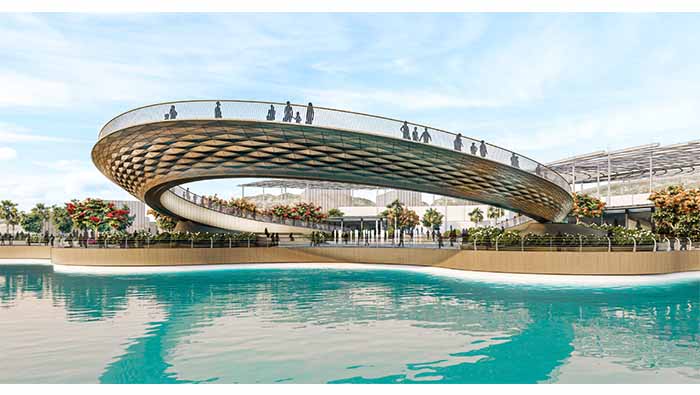
Muscat: Muscat Municipality has awarded the construction contract for the “Muttrah Square” project, winner of first place in the inaugural edition of Bilarab Bin Haitham Award for Architectural Design.
The project will introduce a vibrant urban character to the Wilayat of Muttrah and provide visitors with enhanced opportunities to enjoy panoramic views of the corniche and Muttrah Fort.
Located in a strategic part of Muscat Governorate, the “Muttrah Square” project spans 7,500 square meters, enhancing the historical and touristic value of the wilayat through its unique landmarks and timeless legacy.
At the heart of the square lies an iconic bridge, 5 metres wide, designed to appear as though floating over the sea.
Its form draws inspiration from the sword of Imam Al-Salt bin Malik Al-Kharusi.
The bridge frames Muttrah’s landmarks in a U-shaped panoramic view and is surrounded by a multi-functional plaza featuring a dancing fountain, and lighting that mirrors the rhythm of the sea.
The surrounding courtyard will serve as a family-friendly open space with green areas, pedestrian pathways, and more.
Ahmed bin Mohammed Al-Humaidi, Chairman of Muscat Municipality, stated that the “Muttrah Square” project represents a key pillar of the Municipality’s vision to beautify the wilayat and enhance its tourism appeal, while preserving its cultural richness and historic identity.
He emphasised that the project is more than just an urban development - it embodies an ambitious vision to revive the visual memory of the six wilayats of the governorate and to achieve harmony between authenticity and modernity.
Chairman of Muscat Municipality also said that the Muttrah Square is a landmark project designed to infuse the capital with high-quality urban elements that elevate the quality of life, enrich the tourism experience, and align with the aspirations of the National Urban Development Strategy 2040, which aims to build cities that are vibrant, liveable, and identity-driven.
He affirmed that preserving cultural heritage does not conflict with architectural innovation but can merge with it to create spaces that reflect both the spirit of the past and the promise of the future.