Wednesday 23 / September / 2026
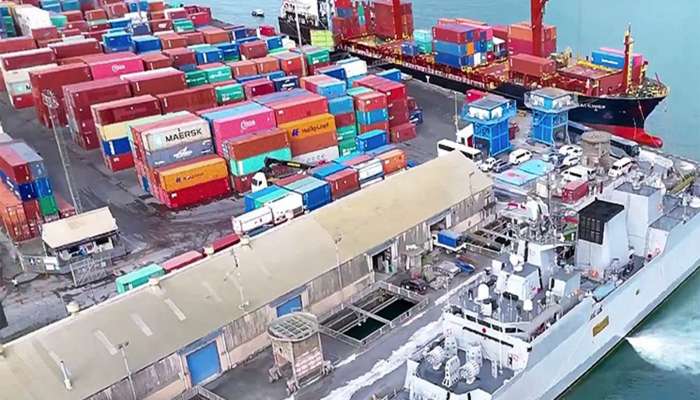
India–Russia economic ties are rapidly diversifying beyond energy and defense into fertilisers, pharmaceuticals, machinery, agriculture, and IT services.
India's labour-intensive strengths and Russia's capital-intensive capabilities are driving a strong post-pandemic trade trajectory. With expanding bilateral engagement and collaborative manufacturing activities, bilateral trade is set to reach USD 100 billion by 2030.
President Vladimir Putin's recent visit to New Delhi and the outcomes of the Russia–India Business Forum 2025 mark the start of a much broader era of cooperation. India-Russia relations are no longer limited to traditional areas like hydrocarbons and military supplies; They are rapidly expanding into advanced manufacturing, pharmaceuticals, digital technologies, and human capital exchange, indicating a modern, future-focused transformation of a historically strong partnership.
Economic Roadmap 2030: Planned Growth for the Future
A key achievement of the summit was unveiling a long-term economic cooperation roadmap through 2030. This plan aims to boost bilateral trade to USD 100 billion, supported by commitments to eliminate non-tariff barriers, regulatory hurdles, and logistics bottlenecks that currently limit India's exports. Progress on a Free Trade Agreement between India and the Eurasian Economic Union is being sped up, along with a bilateral investment treaty that would create a predictable environment for businesses in both countries. Despite global geopolitical challenges, trade between the two nations increased by 12 per cent last year to about USD 68 billion, with 96 per cent of trade now conducted in national currencies, reflecting stronger financial resilience in the bilateral relationship.
India's top exports to Russia include nuclear reactors, pharmaceuticals, mechanical and electrical machinery, organic chemicals, ceramics, and certain agricultural items.
Nuclear reactors, boilers, and mechanical appliances are among the largest categories by value, followed by pharmaceuticals and organic chemicals. These shipments showcase India's competitive strengths—manufacturing generic drugs, specialized chemical intermediates, and a growing range of engineering goods from small and medium enterprises.
On the import side, India has significant USD 7 billion non-oil imports from Russia during 2024-25, meeting its demand in crucial sectors other than energy, such as fertilisers and precious stones.
India's Total Imports from Russia
The trajectory of Imports from Russia 2024-25 (US$ Billion)
Total Imports 63.8
Oil Imports 56.8
Non-Oil Imports 7.0
India's ten largest non-oil imports from Russia, totaling USD 7 billion in FY 2024–25, besides petroleum and fuels, India's main imports from Russia include fertilisers, precious stones and metals (notably rough diamonds supplying India's cutting and polishing industry), wood and pulp products, certain chemicals, and industrial machinery.
India's Top 10 Non–Oil Imports from Russia
Sr. No. HS Code Product descriptions FY 2024-25 (US$ Million)
1 15 ANIMAL OR VEGETABLE FATS AND OILS AND THEIR CLEAVAGE PRODUCTS; 2,394.4
2 31 FERTILISERS. 1,839.9
3 98 PROJECT GOODS; SOME SPECIAL USES. 590.4
4 71 NATURAL OR CULTURED PEARLS, PRECIOUS OR SEMIPRECIOUS STONES, PRE.METALS, CLAD WITH PRE.METAL AND ARTICLES THEREOF; 433.9
5 72 IRON AND STEEL 377.5
6 07 EDIBLE VEGETABLES AND CERTAIN ROOTS AND TUBERS. 331.0
7 48 PAPER AND PAPERBOARD; ARTICLES OF PAPER PULP, OF PAPER OR OF PAPERBOARD. 144.4
8 25 SALT; SULPHUR; EARTHS AND STONE; PLASTERING MATERIALS, LIME AND CEMENT. 131.1
9 84 NUCLEAR REACTORS, BOILERS, MACHINERY AND MECHANICAL APPLIANCES; PARTS THEREEOF. 92.4
10 28 INORGANIC CHEMICALS; ORGANIC OR INORGANIC COMPOUNDS OF PRECIOUS METALS, OF RARE-EARTH METALS, 88.7
Total India Top 10 Non–Oil Imports from India 6,424.3
Source: Ministry of Commerce and Industry.
Expanding Sectoral Engagement: Beyond Traditional Areas
The Russia–India Business Forum brought together key government and business leaders who identified significant convergence across both traditional and emerging sectors. Pharmaceuticals, engineering products, machinery, marine equipment, food processing, cybersecurity, artificial intelligence, medical technology, and advanced industrial manufacturing have become promising areas for joint investments and technology collaborations. The focus was on supporting the growth of small and medium enterprises, improving logistics efficiency, enhancing digital and maritime connectivity, and streamlining regulatory processes to foster ongoing commercial development.
Fertiliser Cooperation: Enhancing Agricultural Security
Russia has become the top fertiliser supplier to India, accounting for 26 per cent of India’s fertiliser imports and making this sector a key part of the evolving economic partnership. Supplies have reached record levels since mid-2023, with Russia delivering 4.7 million tonnes of fertilisers in 2024, a 4.3-fold increase from 2021. The first nine months of this year alone saw a 40 per cent rise in shipments, primarily driven by phosphorus-based fertilisers that are crucial to Indian agriculture. Russia has expressed its readiness to increase supplies of environmentally friendly fertilisers. Russian industry leaders have called for faster FTA negotiations, arguing that reduced tariffs will lower costs for Indian farmers and promote the shift toward more sustainable fertiliser solutions. The change in Russia’s mineral fertiliser exports to BRICS markets has made India the main recipient, highlighting the strategic bond between the two economies in securing long-term agricultural stability.
Connectivity Corridors: Linking Continents
Connectivity has been identified as a core enabler for realising future trade ambitions. Both nations are working actively on multimodal corridors such as the International North–South Transport Corridor, the Northern Sea Route, and the Chennai–Vladivostok maritime link. These pathways are expected to reduce logistics costs, diversify transit routes, and create predictable supply chains connecting the Arctic, Eurasia and the Indian Ocean. The summit further advanced cooperation on maritime expertise, including training Indian seafarers in polar navigation to support Russia’s growing ambitions across northern shipping lanes. These connectivity projects serve not only economic efficiency but also a strategic re-balancing of global transport networks.
Nuclear Collaboration: Beyond Electricity Generation
Nuclear cooperation remains a major pillar of bilateral relations, with significant progress in the ongoing construction of reactors at the Kudankulam Nuclear Power Plant. The summit reaffirmed Russia’s commitment to completing the remaining units and also discussed the formal allotment of a second Russia-assisted nuclear plant site in India. The partnership is now expanding beyond civilian energy generation into areas such as nuclear medicine, agriculture, fuel-cycle management, and advanced research on reactor technologies. Russia has expressed readiness to support India in exploring small modular reactor initiatives, which align with India’s goals of sustainability and technological self-reliance in the nuclear domain. The localisation of critical reactor components and fuel assemblies is being prioritised to strengthen domestic manufacturing capabilities, reduce reliance on external suppliers, and promote Atamanirbhar India.
Pharmaceuticals and Healthcare: An Increasing Strategic Connection
Healthcare and pharmaceuticals are emerging as one of the most dynamic areas of bilateral engagement. A significant breakthrough announced during the visit is the establishment of an Indian anti-tumour drug manufacturing facility in Russia’s Kaluga region through a collaboration involving BDR Pharmaceuticals and Russian partners. This development signals deeper cooperation in health innovation, medical infrastructure, and biotechnology. Future collaboration is set to expand into joint research, talent development, and strengthening healthcare supply chain networks between both countries.
Defence Cooperation: Toward Joint Innovation
Defence remains a core element of India–Russia relations, but the nature of cooperation is shifting from procurement-based transactions to co-innovation. The summit emphasised joint efforts in research and development, co-production, and technology transfer to support the Make in India initiative. Producing spare parts locally for Russian-origin equipment will strengthen India’s military supply chains and foster advanced industrial capacities that can also boost exports. Russia has also proposed collaboration on next-generation platforms, such as the Su-57 fighter jet, indicating a move toward highly technical, future-focused defence partnerships rather than a traditional buyer–seller model.
People-to-People Relations: Tourism and Skilling Initiatives
To strengthen cultural ties and promote tourism, India has introduced free 30-day e-tourist visas and 30-day group visas for Russian citizens, making travel more accessible. Discussions also led to agreements on labour mobility, facilitating the recruitment of skilled and semi-skilled Indian workers into Russia’s construction, engineering, and IT sectors. Education and academic cooperation are being improved through structured travel programmes, student-faculty exchanges, and innovation-driven institutional partnerships. These people-focused linkages deepen mutual understanding and foster a more socially integrated partnership.
Energy Relations: Dependable but No Longer Leading
Energy trade involving oil, gas, coal, and petrochemicals remains crucial, with Russia ensuring steady supplies to support India’s fast-growing economy. However, the focus of the partnership has shifted from reliance on energy to economic diversification. Collaboration is expanding to include critical minerals, coal gasification, and clean-energy solutions, reflecting India’s long-term aims of transition, sustainability, and resilience. This broader energy initiative aligns with national priorities while maintaining mutual benefits.
Diplomatic Trust: The Guiding Star
The summit highlighted a long-standing tradition of diplomatic trust between the two nations. Hon’ble Prime Minister Narendra Modi compared the India–Russia friendship to a “Dhruv Tara,” a guiding star that has remained steady for eight decades, regardless of global upheavals. Modi and Putin reaffirmed their commitment to peace, stability, and constructive engagement during times of conflict and uncertainty. The ongoing strength of leadership-level dialogue, including frequent communication and high-level monitoring, ensures that the partnership remains strategically aligned and future-focused.
A Future-Ready Strategic Partnership
India–Russia relations are undergoing a fundamental transformation with significant advances in trade, industrial growth, nuclear innovation, connectivity, healthcare, defense manufacturing, and people-to-people exchanges. The shift from a limited, sector-specific reliance to a diversified, innovation-driven partnership reflects a shared goal to build a strong, resilient, and future-oriented economic corridor. As the two countries implement the Economic Roadmap 2030, the friendship symbolized by Druzhba Dosti is moving closer to becoming one of the world’s most comprehensive and opportunity-rich bilateral relationships, rooted in historic trust but firmly focused on the future.