Saturday 10 / October / 2026
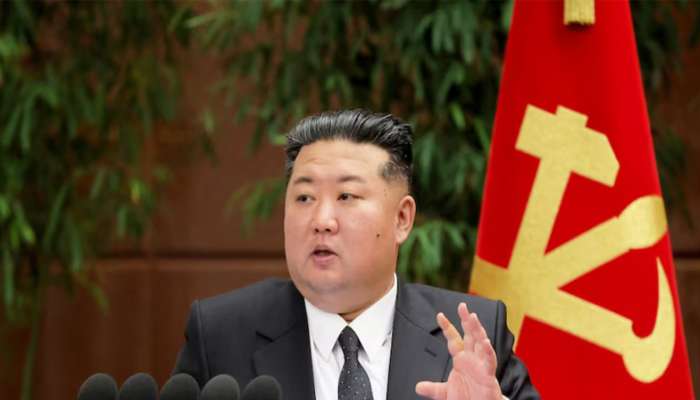
Pyongyang: North Korea confirmed on Monday that it has successfully test-fired upgraded tactical ballistic missiles equipped with cluster warheads, an exercise personally overseen by leader Kim Jong Un.
According to a Kyodo News report citing the official Korean Central News Agency (KCNA), a total of five "Hwasongpho-11 Ra surface-to-surface tactical ballistic missiles struck the target area about 136 kilometres away" during the Sunday drills.
This latest demonstration of military hardware was detected by neighbouring monitors, though initial assessments of the launch platform varied. While Pyongyang identified the projectiles as land-based, authorities in Japan and South Korea noted that several short-range missiles originated from the Sinpo region.
The South Korean military further suggested the weapons "may have been submarine-launched" given the coastal location of the site.
In response to the international monitoring, Kyodo News, citing the state media, clarified that the primary "purpose of the test-fire is to verify the characteristics and power of cluster bomb warhead and fragmentation mine warhead applied to the tactical ballistic missile."
The testing follows a similar weapons trial conducted earlier this month, when Pyongyang announced it had evaluated a "Hwasongpho-11 Ka ballistic missile tipped with a cluster warhead." These repeated tests signal a concerted effort by the North to refine its short-range arsenal using controversial submunitions.
During the inspection, Kim reportedly praised the technical progress of his scientists. According to a Kyodo News report citing the KCNA, the leader believed the "development of different cluster warheads is effective in raising the military's high-density strike capability."
The deployment of such technology remains a point of intense international friction, primarily because the weapons are designed to disperse smaller explosives over a vast radius, often leaving unexploded ordnance behind.
Notably, North Korea is not a signatory to the "Convention on Cluster Munitions that prohibits all use, production, transfer and stockpiling of the weapons that scatter submunitions over a wide area." While a global consensus has seen upwards of 120 nations sign this international treaty, several major powers, including North Korea, Iran, Israel, and the United States, remain outside the agreement.
Pyongyang's persistent development of these munitions is part of a broader strategic push to modernise its military capabilities. This drive has intensified significantly since the 2019 collapse of nuclear diplomacy between Kim Jong Un and US President Donald Trump.
Since that diplomatic breakdown, the North has shifted its focus toward acquiring sophisticated hardware, including multi-warhead nuclear missiles, hypersonic projectiles, and submarine-launched ballistic missiles.
The integration of these technologies is widely viewed as a calculated attempt to bypass and overwhelm the existing missile defence systems maintained by Washington and Seoul.