Wednesday 24 / December / 2025
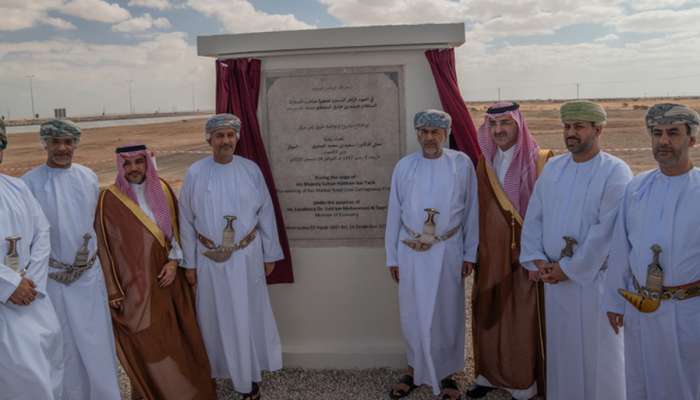
Duqm: The Public Authority for Special Economic Zones and Free Zones (OPAZ) celebrated today the opening of two significant additions to the road network in the Special Economic Zone at Duqm (SEZAD). The projects include the dualization of Sultan Said bin Taimur Road (Southern National Road No. 32) and the dualization of the Ras Markaz Road.
The ceremony was held under the auspices of Dr. Said Mohammed Al Saqri, Minister of Economy, who emphasized that the establishment of new transport projects aligns with national economic and social development plans. He noted that these infrastructure improvements positively impact the competitiveness of the national economy and support sustainable growth by enhancing trade movement and logistical connectivity between various industrial, tourism, and commercial projects.
Eng. Ahmed Ali Akaak, CEO of SEZAD, highlighted that 2025 has been a landmark year for infrastructure, seeing the completion of internal roads in the new Sai commercial district and ongoing work on the dual coastal road in the tourist area. He specifically noted the importance of the Omani-Saudi partnership in the Ras Markaz project, which was funded by the Saudi Fund for Development and executed by an Omani-Saudi consortium including Strabag Oman and Al Rosan Contracting.
The Southern Road serves as a vital artery connecting the city center to Duqm Airport, oil storage areas, and renewable energy projects. Meanwhile, work continues on the northern section of the Sultan Said bin Taimur Road to facilitate access to the Duqm Refinery and heavy industrial zones for those arriving via the Sinaw-Mahout-Duqm road. Similarly, the Ras Markaz dualization project connects the strategic oil storage terminal and clean energy projects to the heart of Duqm.
In total, the two projects and their associated service roads span approximately 67 kilometers and feature full lighting. The Sultan Said bin Taimur project included the construction of eight intersections equipped with smart traffic signals and an integrated control system connected via fiber optics to the SEZAD headquarters. To ensure climate resilience, the roads were designed with box culverts and advanced drainage systems. The Ras Markaz road was built to high specifications to prevent water accumulation, utilizing concrete bridges over wadi paths and 100,000 meters of metal safety barriers to secure vehicles along the route.
The inauguration was attended by Sheikh Dr. Ali bin Masoud Al Sunaidy, Chairman of OPAZ, and Sultan bin Abdulrahman Al Marshad, CEO of the Saudi Fund for Development, alongside several other officials and dignitaries.