Wednesday 31 / December / 2025
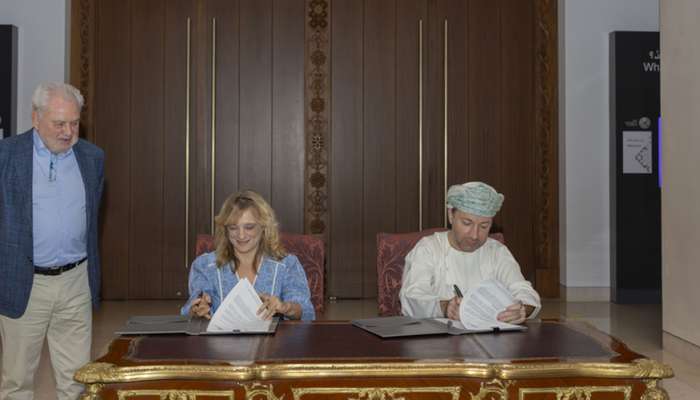
Muscat: The National Museum signed today an agreement to stage an exhibition titled “Wonders of the World: From Maps to Artistic Masterpieces”, in collaboration with the Phoebus Foundation of Belgium.
This initiative aims to enhance cultural and artistic cooperation between the two countries in the fields of art, culture, and shared artistic heritage.
The agreement was signed on behalf of The National Museum by Jamal Hassan Al Moosawi, Secretary-General of the National Museum, and on behalf of the Phoebus Foundation by Dr. Katrien Van Cauteren, Chief Executive Officer of the Foundation, in the presence of Ferdinand Huts, Chairman of the Board of the Phoebus Foundation.
As per the agreement, the exhibition will be held from 2 December 2026 to 2 March 2027. It will highlight the contributions of Flemish artists and scholars during the early modern period (16th–18th centuries), demonstrating how they sought to understand the world around them with precision and passion. This was achieved through cartography, the study of nature, including plants, shells, and minerals, and through meticulous visual representations that combine scientific inquiry with aesthetic refinement.
These works emerged within a culture characterised by flourishing trade, a spirit of discovery, and exceptional craftsmanship, one that regarded the world as a space worthy of observation and contemplation. The exhibition places this Flemish perspective in a balanced cultural dialogue with the Sultanate of Oman, drawing on shared elements such as maritime horizons, navigation routes, and a mutual interest in materials and visual culture.
The Phoebus Foundation is regarded as one of Europe’s leading cultural and artistic institutions. It is dedicated to the acquisition, conservation, and management of art collections, as well as the organisation of exhibitions, cultural programmes, and scholarly research related to the arts, thereby contributing to the preservation of artistic heritage and its presentation to the public within a comprehensive academic and cultural framework.
It is worth noting that this exhibition forms part of the National Museum’s ongoing efforts to strengthen international cultural dialogue and to highlight points of convergence between civilisations through art and culture. These efforts contribute to consolidating the Sultanate of Oman’s position as a hub for cultural exchange and civilisational dialogue, while supporting partnerships with leading international cultural institutions of long-standing expertise.