Sunday 30 / August / 2026
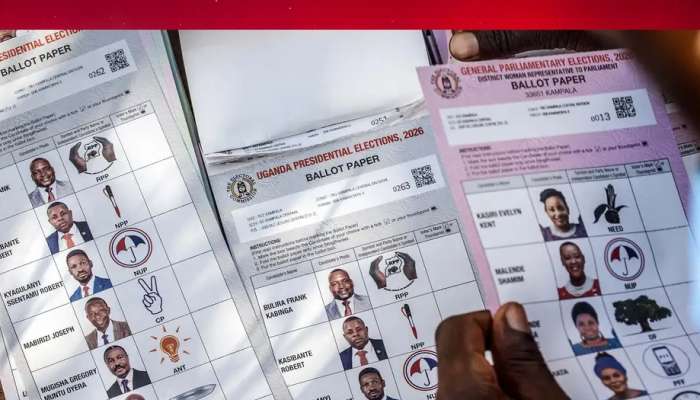
Pretoria: As several African countries head to the polls in 2026, election outcomes will directly shape leadership, policy priorities, and democratic credibility at home, while also influencing regional alliances and global security cooperation.
DW takes a look at key votes scheduled across Africa in 2026 and what’s at stake.
January: Benin — tensions after a foiled coup
Parliamentary elections took place on January 11 in Benin against the uneasy backdrop of a coup d’etat, which was foiled just five weeks prior to the vote.
With military juntas also being at the helm in two of Benin’s immediate neighbors to the north, Burkina Faso and Niger, little to no change is expected in the composition of the 109 seats in the National Assembly after pro-government parties won nearly all of them.
Presidential elections are scheduled for April 12.
January: Uganda — contested continuity
President Yoweri Museveni managed to secure a seventh term in office, with the official result claiming that the octogenarian leader clinched over 71% of the vote in Uganda. His main rival, Bobi Wine, received about 24.7% and rejected the outcome as fraudulent. Museveni will now be in charge of the country until 2031.
While election observers reported no evidence of any notable interference in the actual vote, the country’s long history of intimidation, arrests and abductions of opposition voices has long instilled a sense of “fear and eroded public trust in the electoral process,” as observed by former Nigerian President Goodluck Jonathan, who represented a delegation of election observers from the African Union (AU).
Reports of significant repression against opposition candidate Bob Wine amid an internet blackout during the ballot paint a rather troubled picture for the future, raising questions, once more, about the legitimacy of the vote.
March: Republic of the Congo — incumbent advantage
The Republic of Congo will hold presidential elections on March 22, with longterm incumbent leader Denis Sassou Nguesso expected to hold onto power.
Nguesso, who has been in power since 1997, will face candidates from several opposition groups. However, the US-based think tank Freedom House says that dissident groups face severe repression in the country, giving the nation a remarkably low performance score on its overall political rights and democratic principles.
April: Djibouti — stability amid strategic stakes around the Red Sea
Presidential elections are due to be held by April 2026 in Djibouti, with little change expected in the country located in the Horn of Africa.
The country’s 78-year-old incumbent President Ismail Omar Guelleh is running for a sixth term.
The country’s political stability is closely watched by many Western and Asian powers, due to their strategic military bases and geopolitical location near the Red Sea.
April & October: Cape Verde — democratic role model
In April, parliamentary elections are expected to be held in Cape Verde, followed by presidential elections in October 2026.
The small nation consisting of ten volcanic islands in the Atlantic is known for its strong democratic leadership and is ranked the most democratic nation in Africa and scores higher than many countries worldwide.
June: Ethiopia — fragile election environment
On June 1, Ethiopians will go to the polls for the first time since the end of the Tigray war between the Tigray People’s Liberation Front (TPLF) and the Ethiopian National Defence Force (ENDF) in late 2022.
Ethiopia remains challenged by conflict and tensions, particularly in the Amhara and Oromia regions, complicating efforts to hold credible and inclusive elections.
August: Zambia — reforms and continuity?
On August 12, Zambia will elect a new president and legislature.
Electoral reforms introduced last year expanded the National Assembly and incorporated elements of proportional representation to enhance pluralism.
Incumbent President Hakainde Hichilema is seeking a second term, though observers and critics continue to debate aspects of democratic practice under his leadership.
November: South Africa — local ballot as national barometer
South Africa’s municipal elections in November 2026 will gauge public sentiment on the government of national unity (GNU)under President Cyril Ramaphosa.
The elections would be the first local polls since the formation of the multi‑party coalition government in 2024.
December: The Gambia — presidential contest
The Gambia is due to hold its presidential elections on December 5, with incumbent President Adama Barrow seeking a third term.
Barrow faces widespread disapproval rates nationwide, but opposition fragmentation and growing voter disillusionment are likely to work to the incumbent leader’s advantage at the polls. Parliamentary elections are due to follow next year.
December: South Sudan — will it pull off its first general election?
With a history of repeatedly deferred elections, it is uncertain whether South Sudan will hold its first-ever general elections, which are scheduled for December 22.
The world’s youngest is facing some of the worst economic crises since its independence in 2011, as the ongoing civil war to its north in Sudan continues to block off major revenue streams, such as the full operation of its oil pipelines.
The treason trial of former Vice President and opposition figure Riek Machar has further put a strain on the country’s fragile peace deal, with Machar’s supporters labelling the case “politically motivated.”
Somaliland — elections amid changing status
The autonomous region of Somaliland is also due to hold parliamentary and municipal elections in 2026.
The territory has recently made headlines after being recognised as an independent state by Israel last month, eliciting strong reactions throughout the region and beyond.