Friday 09 / October / 2026
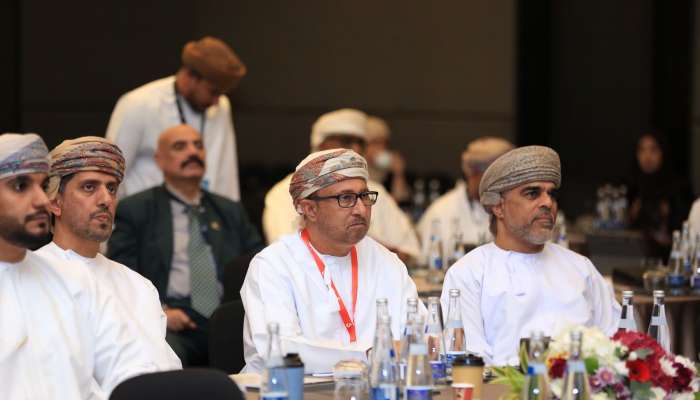
Muscat: The second day of the First Annual Symposium on the Security of Tourist Facilities in Oman, organised by Security and Safety Services in partnership with the Ministry of Heritage and Tourism, concluded with the participation of more than 100 specialists from Oman’s tourism sector, alongside international experts in facility security and crisis management.
The sessions and workshops focused on enhancing safety and security in tourist and hotel facilities, sharing best international practices, and highlighting the importance of strategic partnerships between the public and private sectors in ensuring a safe and sustainable tourism environment.
The lectures delivered addressed a wide range of topics, including preventive security, emergency response, data protection, training, risk management, and digital technologies that integrate the visitor experience from airport to hotel. The discussions also emphasised the role of tour guides as cultural and security ambassadors.
Brigadier General Eng. Saeed Al-Asmi, Chief Executive Officer of Security and Safety Services, emphasised in his lecture during the opening session that security in tourist facilities is not merely a preventive measure, but a strategic investment that protects the national economy and strengthens Oman’s reputation as a safe global destination.
He explained that the success of the tourism sector depends on the integration of efforts among all stakeholders, including hotels, security teams, local authorities, civil society, and tour guides.
He noted that tour guides play a dual role as cultural and security ambassadors by guiding visitors along safe routes and presenting a positive image of the Sultanate, which enhances visitor confidence and contributes to a high-quality tourism experience.
The lecture highlighted that effective tourism security increases return on investment by reducing risks, improving visitor satisfaction, and attracting foreign direct investment, demonstrating the close relationship between investment in security and the sustainability of the tourism sector.
Institutional and civil society partnerships
The lecture stressed the importance of strategic partnerships among tourism institutions, local authorities, security teams, and civil society. Yusuf bin Rashid Al-Mafraji, Director of Human Resources at the Ministry of Heritage and Tourism, stated that hotel facility security requires integrated cooperation to ensure prevention, effective response, and recovery from any crisis.
He explained that strengthening tourism security includes developing strategic frameworks for hotel facilities aligned with operational objectives, adopting cybersecurity measures to protect visitor data and hotel booking systems, implementing preventive planning and risk and crisis management, and preparing effective evacuation plans.
He also emphasised building a culture of safety through training and qualifying national cadres while promoting safe behaviour among staff.
Al-Mafraji confirmed that these measures not only protect lives and property, but also enhance the guest experience, support economic stability, and attract international visitors.Global studies show that tourism security reduces losses and increases demand, while crises and terrorist incidents significantly reduce tourism activity, as seen after the events of September 11, 2001, and periods of unrest in the Middle East.
Hotel security: Transitioning to global standards and tourism sustainability
Kate Ansley, British Security Consultant, delivered a comprehensive lecture on hotel facility security, highlighting the importance of adopting international standards such as ISO 31000 for risk management and ISO 45001 for occupational health and safety.
She emphasised that hotel security is no longer limited to an administrative function, but represents an integrated approach that protects the brand, guests, and facilities.
She outlined key risks facing hotels, including unauthorised access, theft, fire incidents, cybersecurity breaches, accidents in pools and water facilities, and political unrest or protests that may disrupt operations.
Ansley presented a range of prevention and risk management strategies, including smart access systems, electronic locks, staff background checks, regular evacuation drills, fire suppression systems, network protection, separation of guest and internal systems, and flexible plans for managing civil disturbances in coordination with local authorities.
She stressed that continuous improvement, performance measurement through KPIs, repeated practical training, and digital transformation are essential elements in building a safe and sustainable tourism environment.
Integrating the travel experience from airport to hotel: AST Services Model
AST Services presented an integrated model for managing the travel experience from airport to hotel, aimed at improving operational efficiency, ensuring passenger comfort, providing real-time transparency, and enhancing security procedures.
The model relies on advanced digital technologies, including a unified application for transport booking and flight tracking, API integration between airlines, hotels, and transport providers, smart data analysis to predict demand and optimise schedules, and secure information systems to protect passenger data and transactions.
The model also includes tailored services for VIP and VVIP guests, such as secure reception after immigration, escorted luggage handling, coordinated transport and hotel scheduling with live updates, priority lanes, and enhanced security for baggage and transport.
AST Services emphasised that multi-level coordination through gold, silver, and bronze command centers, supported by emergency protocols, ensures business continuity and rapid response to unexpected situations.
Analysing global attacks on tourist facilities: Key lessons
Steven Thompson, British Security Expert, presented an in-depth analysis of attacks on tourist facilities between 2020 and 2025, noting that complex attacks—often involving a vehicle-borne explosive followed by armed assailants—were the most common. These attacks frequently targeted hotels hosting foreign officials and international tourists.
He explained that weak security coordination, limited training, and partial evacuation planning often lead to significant human and material losses. Thompson outlined key recommendations, including strengthening hotel perimeter security, applying layered screening and surveillance, conducting regular staff training, establishing unified command centers, coordinating with local authorities and intelligence agencies, integrating security with fire safety and crisis management, and focusing on early detection through advanced monitoring systems.
He concluded that investing in integrated security systems, prevention, training, and coordination among all stakeholders is the most effective way to protect visitors and maintain the stability of the tourism sector.
Future Vision: Oman 2040
Participants emphasised that the security of tourist and hotel facilities is an integral part of Oman Vision 2040, which aims to attract sustainable tourism, diversify national income sources, create employment opportunities for Omani youth, and strengthen the Sultanate’s position as a safe and innovative global destination.
The symposium highlighted the importance of combining traditional and digital security measures, continuous training, cooperation with civil society, and proactive risk management to create a tourism environment that is both safe and attractive to investors and visitors.
Symposium conclusion
The symposium concluded by reaffirming that tourism security in the Sultanate of Oman represents a strategic investment that protects the economy, enhances the visitor experience, and ensures the sustainability of the tourism sector.
Participants praised the international participation and global expertise that supported knowledge exchange and improved the readiness of Omani facilities to face future challenges.
The organising committee called for continued cooperation between the public and private sectors, further development of national competencies, and the effective use of digital technologies to monitor and manage risks, ensuring that Oman becomes a global benchmark in tourism security.