Sunday 25 / January / 2026
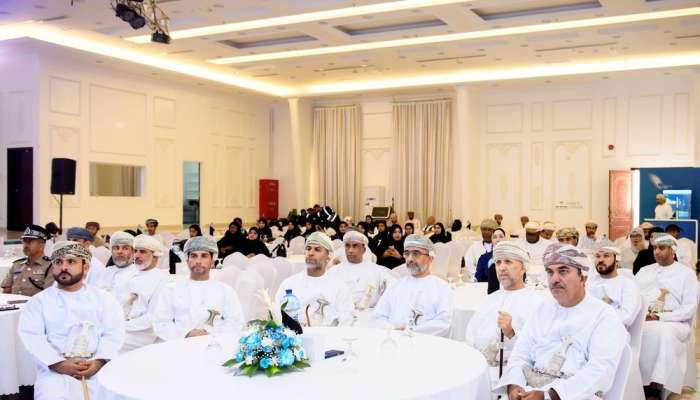
Sur: The “Smart Governorates and Cities Conference and Hackathon” began on Sunday in the Wilayat of Sur, aiming to build a smarter and more sustainable future based on innovation and digital transformation.
The event was held under the patronage of Dr. Yahya Badr Al Maawali, Governor of South Al Sharqiyah.
The conference serves as a strategic national platform that brings together decision-makers, experts, and innovators to promote the concepts of smart governorates.
This aligns with the priorities of “Oman Vision 2040,” which aims to enhance the quality of government services and achieve technical integration across various sectors.
The conference sessions discuss local and international trends and policies in the fields of sustainability and innovation.
They focus on the role of emerging technologies and artificial intelligence applications in managing governorates, addressing developmental and environmental challenges through innovative digital solutions that enhance institutional efficiency.
Dr. Al Maawali emphasised in his speech that the conference embodies a strategic approach to serve society and promote comprehensive development.
He noted that innovation and digital transformation have become a national necessity driven by global changes, contributing to increasing government performance efficiency and improving the quality of life for citizens and residents.
He affirmed that the conference and hackathon align with the targets of Oman Vision 2040, particularly in the pillars of the economy, development, governance, and institutional performance, to build a knowledge-based economy and an effective digital government capable of competing regionally and globally.
He also underlined the Governorate’s full commitment to supporting the outcomes of the “Smart Governorates Conference and Hackathon 2026” and working to transform the creative solutions presented by participants into implementable field projects.
For his part, Dr. Ali Amer Al Sheithani, Undersecretary of the Ministry of Transport, Communications, and Information Technology for Communications and Information Technology, stated that the conference represents a pioneering idea for developing smart governorate models. He indicated that adopting modern technologies contributes to raising performance efficiency, improving productivity, and reducing costs.
He expressed his hope that the hackathon would produce quality solutions that support digital transformation pathways and increase user satisfaction.
The conference featured a presentation by the international speaker, Mounir Kabbara, who addressed the accelerated transformations in global urbanization patterns, where 68% of the world’s population is expected to live in cities by 2050.
Kabbara reviewed the significant growth in the smart cities market, which is estimated to reach $4.06 trillion by 2031.
He also highlighted the evolution stages of cities from traditional models to “cognitive cities” reliant on data and artificial intelligence, explaining ways to overcome challenges faced by municipalities, such as cybersecurity and upgrade costs, through flexible financing models and effective data governance.
The hackathon accompanying the conference focused on six main themes: Environment and Sustainability, Smart Cities and Services, Smart Agriculture and Fishing, Transportation and Safety, E-commerce, and Smart Urban Planning.
The Smart Governorates Conference concluded with a set of strategic recommendations aimed at accelerating the pace of digital transformation in the Sultanate of Oman, in line with the targets of “Oman Vision 2040.”
Participants emphasised the necessity of focusing on high-impact use cases and integrating them into the national digital system, while linking smart city initiatives to the competitive economic advantage of each governorate.
The programme reviewed the experience of Sultan Haitham City as the first integrated smart city in the Sultanate of Oman, relying on digital infrastructure and smart governance to ensure sustainable urban management.
In a related context, Fatima Said Beit Dashesha, Director of Salalah Smart City Project, presented the strategic vision for Dhofar Governorate, affirming that smart technologies represent a lever for sustainable development that serves humanity and the environment and supports modern urban planning.
The conference was accompanied by an exhibition of digital projects in South Al Sharqiyah Governorate, highlighting practical applications.
These included utilising satellite data to support planning and decision-making, smart lighting and irrigation projects, the “Mashariq” application and the Governorate’s digital portal, and the “An’am” application for smart slaughterhouses.
For its part, ETCO Space Company showcased advanced technologies for analysing satellite images supported by artificial intelligence, aimed at monitoring urban and environmental changes and providing interactive geospatial analysis platforms to support decision-making based on precise data.
At the end of the conference, a set of strategic recommendations were announced, most notably adopting the Governorate as a national pilot model for implementing the smart governorates approach, and developing a unified platform for government services in the Governorate based on artificial intelligence technologies.
On the sidelines of the conference, entrepreneurs from the Wilayat of Sur showcased innovative digital solutions. Prominent among these were the “Sahim” application, specialized in the smart management of containers and reports, and the “Radm” electronic platform for efficiently managing construction waste.
These innovations reflect the growing role of the private sector and youth in promoting environmental sustainability and enhancing the quality of municipal services.
The conference culminated in the conclusion of the hackathon activities, where the three winning teams who presented promising technical solutions were felicitated.
The conference recommended adopting these projects and enrolling their owners in business accelerators and innovation incubators, to ensure transforming their ideas into pioneering projects that contribute to the digital renaissance in the Governorate.