Sunday 01 / February / 2026
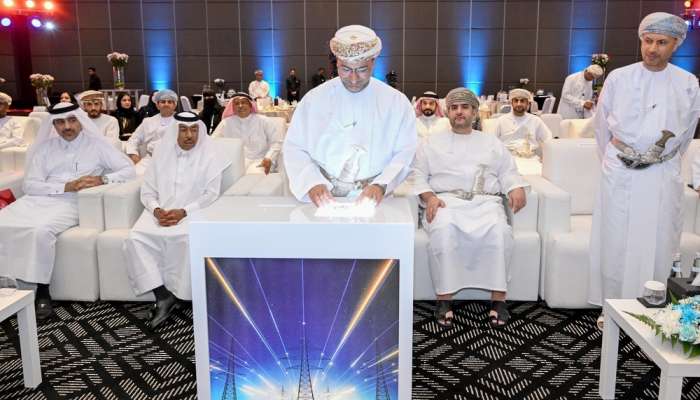
Muscat: The GCC Interconnection Authority (GCCIA) announced the commencement of the direct electrical interconnection project between the Authority’s grid and the grid of the Sultanate of Oman.
This strategic move reflects the advancement of Gulf integration within the energy sector and the strengthening of regional infrastructure. The announcement was made during a ceremony held this evening in Muscat under the auspices of Mohsen Hamad Al Hadrami, Undersecretary of the Ministry of Energy and Minerals and Chairman of the Board of Directors of the GCCIA.
Al Hadrami emphasized that the direct electrical interconnection project with the Sultanate of Oman is not merely a technical expansion of a power grid, but rather an extension of a long-term strategic vision established by the GCC leaders. They approved the Gulf Interconnection Project as a cornerstone of Gulf infrastructure integration, driven by the conviction that energy security is a fundamental pillar for national stability, economic growth, and sustainable development.
He noted that the Gulf interconnection has proven, over more than two and a half decades, to be one of the most successful models of joint Gulf action, contributing to the reliability of electrical grids and achieving significant economic savings for GCC member states.
He added that the direct connection project with Oman enhances the depth of the Gulf grid and increases its operational flexibility, embodying an advanced model of Gulf partnership in financing vital infrastructure projects to support energy transition and sustainable development in the region.
For his part, Eng. Ahmed Ali Al Ibrahim, CEO of the GCCIA, explained that the project is one of the largest expansion projects in the Authority’s history. It aims to boost the Gulf grid's capacity to accommodate the rapid growth in electricity demand, amid the expansion of internal grids, significant changes in electrical loads, and increased power generation across the GCC, while also supporting renewable energy projects and enhancing grid readiness for emergencies.
He confirmed that the project will achieve substantial operational and economic benefits, enhance the reliability of Gulf electrical grids during the transition toward renewable energy, and increase power exchange capacity among member states. He further noted that the project embodies the Authority’s ability to transform the strategic vision of the GCC leaders into executive projects with tangible impact. He revealed that the total cost of the project is approximately USD 700 million, funded through Gulf financing partnerships. The Authority previously signed financing agreements with the Qatar Fund for Development and Sohar International Bank to provide USD 600 million in financing for the project.
Fahad Hamad Al Sulaiti, Director General of the Qatar Fund for Development, stated that the Fund’s participation in financing the project falls within its commitment to strengthening the economies of Arab countries by supporting vital infrastructure projects and sustainable development through the provision of necessary financing and loans.
He pointed out that this initiative is based on a shared belief in the importance of regional cooperation, noting that energy represents an essential element for achieving stability and socio-economic development. He added that the project reflects the importance of regional cooperation and Gulf partnerships in supporting strategic energy projects, contributing to the construction of a more resilient and sustainable electrical system in the region.
The project involves the construction of two 400 kV electrical lines spanning approximately 530 kilometers, connecting the Authority’s Al Sila station in the United Arab Emirates with the Ibri station to be established by the Authority in the Sultanate of Oman. It also includes the construction of two main 400 kV transmission stations in both Ibri and Al Bynouna, equipped with the latest protection, control, and communication systems according to international best practices.
Additionally, the project includes the construction of a dynamic compensator station to help increase grid stability and transmission capacity, providing a total capacity of up to 1,600 MW. This will significantly enhance the flexibility of the Gulf grid and raise the Sultanate of Oman’s capacity to exchange energy with high efficiency with the connected Gulf countries.
The project will contribute to supporting the reliability of electrical grids, increasing support capacities during emergencies, and facilitating the integration of new and renewable energy into Gulf grids, leading to significant economic and operational savings.
The direct interconnection with the Sultanate of Oman is a strategic step toward enhancing the integration of Gulf and regional energy networks, increasing the reliability and sustainability of electricity systems, and supporting the GCC’s goals in energy transition and carbon emission reduction, thereby solidifying the Gulf Interconnection’s position as a global model for regional energy integration.