Saturday 19 / September / 2026
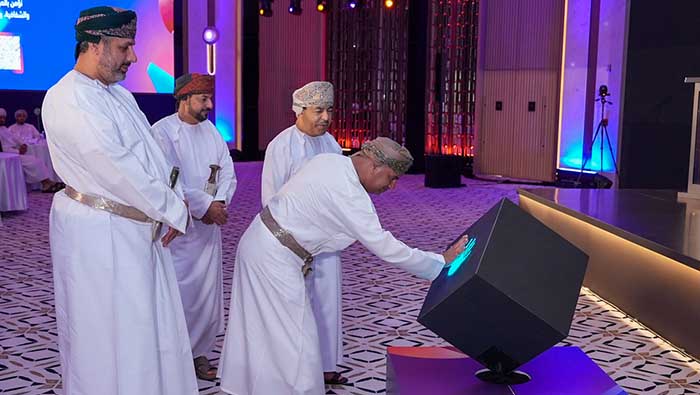
Muscat: The University of Technology and Applied Sciences (UTAS) in Muscat on Sunday launched its strategic plan for the period 2026-2030. The ceremony was held under the auspices of Sheikh Ghosn bin Hilal Al Alawi, Chairman of the State Financial and Administrative Audit Authority.
The new plan stems from an institutional approach that consolidates the role of higher education in actively contributing to national development, enhancing the readiness of human capital and linking knowledge with application and labour market needs in a manner that meets the objectives of Oman Vision 2040 in building a competitive knowledge-economy based on innovation and skills.
In a speech at the ceremony, Dr. Said bin Hamad Al Rubai’ee, Vice Chancellor of the University of Technology and Applied Sciences, said, “The plan represents a long-term commitment to institutional transformation, placing human beings at the heart of the educational process. It emphasizes concepts of applied education, research relevant to real-world challenges and partnerships with various sectors.”
Dr. Said added that the university views the plan as a strategic framework that redefines its role as an educational institution, constituting a national platform for converting technical knowledge into practical applications that directly influence the lives of students, the community and the labour market.
He explained that the university’s mission is to develop competitive capabilities to meet the demands of the future and portray its aspiration to be a globally recognised university in the field of technology and applied sciences.
The plan is the outcome of an institutional march developed through analyses, workshops and reviews. As many as 2,579 students, academics, employees and partners took part in shaping the plan.
For her part, Dr. Sarah Mohammed Al Bahlani, Dean of the College of Education in Al Rustaq (Head of the Strategic Plan Review and Evaluation Team), said that the plan’s document reflects institutional interaction based on accurate understanding of technological and educational developments and future requirements.
The plan embodies a set of institutional values that represent an ethical and professional framework for university action—including integrity, excellence, partnership, national identity, diversity, flexibility and adaptability—which altogether enhance the culture of institutional cooperation and ensure the sustainability of application.