Wednesday 25 / February / 2026
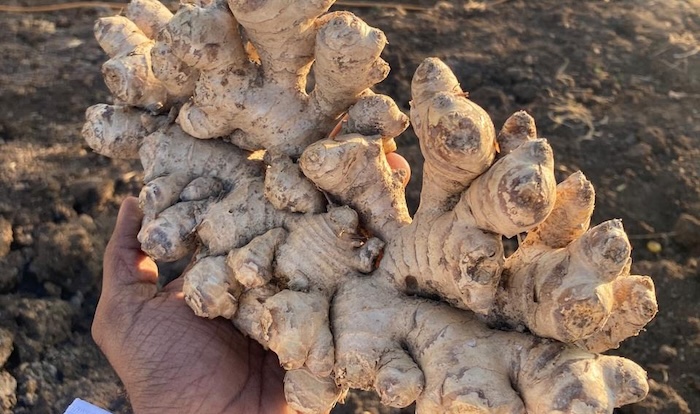
Muscat: In 2024, the Directorate General of Agriculture , Fisheries, and Water Resources in Dhofar Governorate launched the first phase of a ginger cultivation project in the Wilayats of Rakhyut and Dhalkut, funded by the Agricultural and Fisheries Development Fund. This initiative represents a significant step towards strengthening the agricultural sector and achieving food security in Dhofar.
The project was inaugurated in June 2024 with the participation of approximately 30 farmers, cultivating a total area of two acres. The first harvest yielded approximately one ton.
The second phase of the project was completed in 2025, targeting another 30 farmers. The second harvest took place in February 2026, with an estimated yield of 2.5 tons.
Preliminary results indicate that ginger is a promising crop with potential for further investment and expansion to increase production and reduce imports.
Engineer Radwan bin Abdullah Al Ibrahim, Director of the Agricultural Development Department and Project Manager, confirmed that the program is not limited to agriculture alone, but also includes technical and advisory support for farmers in land preparation, installation of modern irrigation systems, and monitoring of all stages of cultivation until harvest.
He said that the ginger project represents an extension of the successes achieved by the project to localize turmeric cultivation in Dhofar. The project also aims to reduce reliance on imports and encourage local cultivation of plants with high nutritional and economic value.
He added that the ginger project management is working to expand its scope to include other wilayats and target a larger segment of farmers over the next two years. This is part of strengthening the local community's participation in modern agricultural projects and providing job opportunities and sustainable income for families in the region through this promising agricultural activity.
Engineer Radwan bin Abdullah Al Ibrahim pointed out that the current season of ginger cultivation is witnessing remarkable progress after a successful trial season, as the team will work during 2026 to increase the quantity of production and the quality of the product by adding technical improvements, evaluating agricultural practices and improving the soil, which will contribute to better results and the possibilities of expanding its cultivation.
He stressed that the project needs greater support in terms of marketing, storage, and expanding the areas to increase the volume of production and increase economic feasibility.




