Thursday 20 / August / 2026
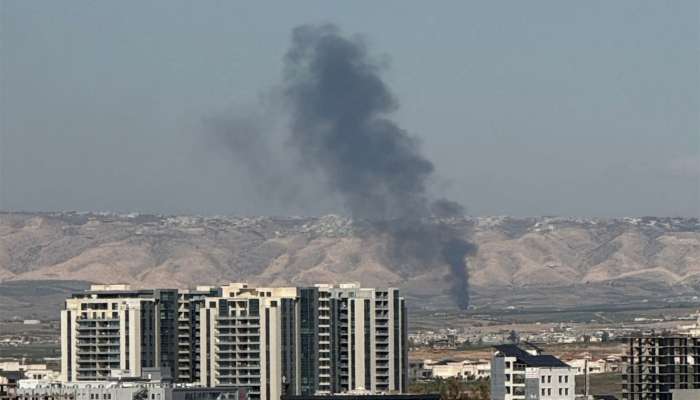
New Delhi: As geopolitical tensions intensify across West Asia, global trade dynamics are undergoing a structural shift, with political risk insurance emerging as a critical safeguard for businesses navigating an increasingly volatile environment.
Trade flows, once dictated largely by economic fundamentals, are now deeply influenced by geopolitical flashpoints. The ongoing instability in West Asia, particularly around key maritime corridors such as the Strait of Hormuz and the Red Sea, has amplified concerns over supply chain disruptions, rising freight costs, and delayed shipments.
The West Asian crisis has underscored vulnerabilities in global shipping routes, with nearly 80 per cent of trade by volume moving via sea. Strategic chokepoints in the region are witnessing heightened strain, leading to cascading effects on energy prices, transit timelines, and contractual reliability. Freight rates on key routes have reportedly surged by 30-50 per cent, while delays of up to two weeks are becoming increasingly common.
Experts assert that the nature of risk in global trade has fundamentally evolved. Tejas Jain, Founder and CEO of BimaKavach, said, "Marine insurance has always been a business essential, but its role today goes far beyond covering goods in transit... Businesses run on cash flow. And cash flow depends on goods arriving on time and invoices clearing on schedule."
The crisis in West Asia, coupled with ongoing global conflicts and rivalries, has made traditional risk mitigation tools insufficient. Companies are now exposed not just to commercial risks but to sovereign-driven uncertainties such as political violence, sanctions, and currency restrictions.
Vishwajeet Kadam, Head - Credit Specialty at EDME Insurance Brokers, says this is where political risk insurance is gaining prominence. "The defining risk in global trade today is not credit -- it is uncertainty driven by geopolitical actions. Political risk insurance is what enables businesses to operate despite that uncertainty. We are seeing companies that once considered this coverage optional now treating it as non-negotiable."
Conflicts and tensions in regions like West Asia are forcing businesses to rethink operational strategies. Rajesh Kumar Singh of Howden India noted, "The world's trade routes are under pressure like never before... Standard shipping policies were never written with missiles and drone strikes in mind--that gap is exactly what War Risk and Hull cover was built to fill."
For Indian companies expanding into West Asia and other emerging markets, the implications are particularly significant. With the region remaining central to energy supplies and infrastructure opportunities, managing geopolitical risk has become a strategic imperative.
As global supply chains increasingly intersect with politically sensitive geographies, Political Risk Insurance is no longer viewed as optional. Instead, it is fast becoming a prerequisite for sustaining cross-border trade in an era defined by uncertainty.
"In today's environment, if you are moving goods or capital across borders without political risk cover, you are essentially trading blind," Kadam added.
With the West Asian crisis showing little sign of immediate resolution, experts believe the demand for structured risk solutions will continue to rise, reshaping how global trade is financed and protected.