Sunday 11 / October / 2026
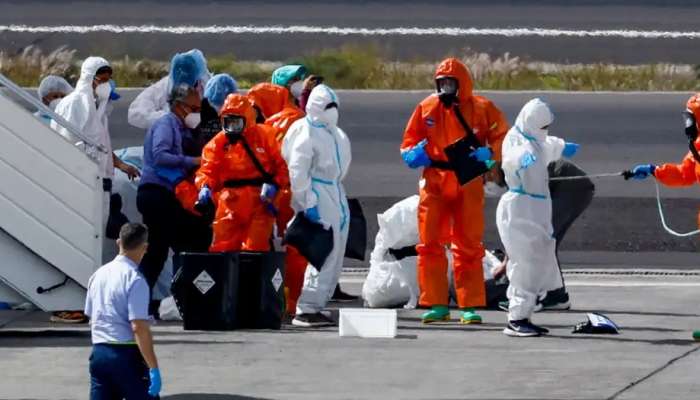
Tenerife: The MV Hondius, at the centre of a hantavirus outbreak linked to three deaths, arrived at the Port of Granadilla in Tenerife on Sunday, where an international operation is underway to safely disembark and repatriate passengers, according to CNN.
As the ship anchored off Tenerife at sunrise, small boats with flashing sirens approached the vessel while medical personnel and officials from the World Health Organization gathered at the port. People in hazmat suits were also seen near the dock as preparations began for the controlled evacuation.
WHO Director-General Tedros Adhanom Ghebreyesus confirmed the ship's arrival in a post on X.
"MV Hondius cruise ship has reached the shores of Tenerife. We are in the port, coordinating the next steps for the safe disembarkment of the passengers. #hantavirus," Tedros posted.
According to CNN, Spain's Health Minister Monica Garcia said medical teams boarded the ship shortly before 8 am local time to carry out health checks on passengers and crew before evacuation procedures began.
The outbreak aboard the vessel has been linked to hantavirus, a rare disease commonly spread through exposure to infected rodents' urine or faeces. Since the ship departed Argentina last month, three deaths have been associated with the outbreak, while several others required medical evacuation.
As per tour operator Oceanwide Expeditions, passengers will be brought ashore in small boats carrying no more than 10 people at a time. Disembarkation is being coordinated according to nationality and repatriation flight schedules.
Several countries, including the United States, Germany, France, Belgium, Ireland and the Netherlands, are sending aircraft to evacuate their citizens.
A US Centres for Disease Control and Prevention official told CNN that 17 American passengers, none showing symptoms, would be transported to the University of Nebraska Medical Centre for assessment and home-based monitoring for 42 days.
Spanish authorities said 14 Spanish passengers would be the first group to disembark. They will wear FFP2 masks during transport to a military hospital, where they will remain isolated in individual rooms and undergo PCR testing.
The ship's arrival has also raised concerns in the Canary Islands. Regional leader Fernando Clavijo had earlier opposed allowing the vessel to dock, while port workers in Tenerife staged protests over what they described as insufficient communication regarding possible health risks.
Following the evacuation of passengers, the MV Hondius is scheduled to continue to Rotterdam in the Netherlands, where the crew will disembark and the ship will undergo disinfection procedures, CNN reported.
A total of eight Hantavirus cases, including three deaths (case fatality ratio 38 per cent), were reported as of Friday (May 8). Six cases were laboratory-confirmed as hantavirus infections, with all identified as Andes virus (ANDV), according to a statement from the World Health Organization (WHO).
On May 2, a cluster of passengers with severe respiratory illness aboard a cruise ship was reported to the World Health Organization (WHO). At that time, according to the ship operator, 147 passengers and crew were onboard, and 34 passengers and crew had previously disembarked. Since the last Disease Outbreak News published on May 4, three of the suspected cases have been confirmed, and one additional confirmed case has been reported.
Meanwhile, in India, amid concerns triggered by reports of a hantavirus outbreak on the cruise ship carrying two Indian crew members, along with other passengers, medical experts on Friday sought to allay fears, stating that there is no cause for panic and no pandemic threat to India.
While speaking to ANI, Dr Naveen Kumar, Director of ICMR-National Institute of Virology (NIV), Pune, stated that the reported infections among Indian nationals appear to be isolated imported cases and do not indicate any community spread within India.
"At present, the reported infections among Indian nationals aboard a cruise ship appear to be isolated imported cases and do not indicate community spread in India. Since hantavirus transmission is primarily rodent-borne and not easily spread between humans, the immediate public health risk remains low," he added.
Dr Kumar further explained the transmission pattern of the virus and clarified that human-to-human spread is extremely uncommon.