Thursday 16 / July / 2026
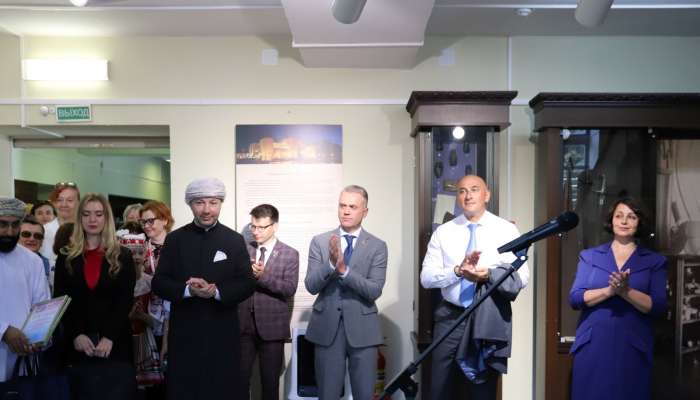
Belarus: The National Museum on Wednesday (15 July 2026), opened the exhibition The Splendour of Silver: Treasures from the Omani Court at the Vitebsk Museum of Local Lore, following the success of its previous showing at the National Art Museum in Minsk in December 2025. The exhibition opens as part of the 35th edition of the International Festival of Arts Slavianski Bazaar, held annually in the city of Vitebsk in the Republic of Belarus.
The opening ceremony was attended, on the Omani side, by His Excellency Jamal bin Hassan al-Moosawi, Secretary-General of the National Museum. Representing Belarus were His Excellency Marat Sergeyevich Markov, Minister of Culture of the Republic of Belarus, and Alexey Vladimirovich Guida, Deputy Chairman of the Vitebsk Regional Executive Committee.
The exhibition celebrates the rich legacy of Omani silver craftsmanship, showcasing a carefully selected collection of artefacts that once belonged to the Sultans of Oman in Masqat and Zanzibar. The exhibition will remain open until 16th August 2026.
Featuring a distinguished selection of museum objects, the exhibition highlights the beauty of silver within Oman's cultural heritage. It explores the diverse roles of silver, demonstrating that its significance extended far beyond the royal court into many aspects of everyday life. The exhibition also showcases the exceptional skill of Omani silversmiths and offers visitors the opportunity to discover a world in which silver symbolises beauty, protection, and the enduring excellence of Omani craftsmanship.
In his opening remarks, His Excellency Jamal bin Hassan al-Moosawi, Secretary-General of the National Museum, stated that the Sultanate of Oman's first participation in this prominent international cultural event marks a significant historic milestone, opening new avenues for professional dialogue and strengthening people-to-people ties with the Republic of Belarus. He explained that the exhibition, The Splendour of Silver: Treasures from the Omani Court, is the result of an ongoing partnership and close cooperation established following the signing of memoranda of understanding in the fields of heritage and culture in 2018. This collaboration has led to shared achievements across museum, research and educational sectors. His Excellency also noted that new joint projects are currently being developed to preserve, study and promote the cultural heritage of both countries.
His Excellency added that the exhibition offers Belarusian audiences an exceptional opportunity to gain a deeper appreciation of Oman's rich cultural heritage through silver jewellery and decorative objects that embody the skill, creativity and distinctive national identity of Omani artisans across the centuries. He further noted that this cultural event represents an important step in building new bridges of friendship and mutual understanding, affirming that cultural heritage remains a universal language that brings peoples together and fosters closer understanding between cultures.
The exhibition is divided into five main sections: the Omani khanjar; the Culture of Fragrance; the Art of Silver-Making; Traditional Dress; and Elite Attire of Prominent Omani Figures in East Africa during that period.
The Omani khanjar section highlights its symbolism as an integral element of the emblem of the Sultanate of Oman, tracing its history and development since the third millennium BCE, with reference to historical evidence confirming the continuity of its form across the ages. The section also presents types of Omani khanjars and their accessories, most notably the Sa‘idi khanjar attributed to the ruling Al Said family and crafted specifically for them, alongside the Nazwani and Suri khanjars. The section further includes a janbiya presented by Ali Abdullah Saleh, former President of the Republic of Yemen, to the late Sultan Qaboos bin Said al-Said.
The Culture of Fragrance section focuses on the importance of fine scents in the daily life and social occasions of Omanis. It displays rare perfume bottles dating back to 1983, made of crystal, 24-carat gold, and silver, representing the first fragrance creations of Amouage Perfumes under the name Amouage Gold. The design of the men’s perfume bottle was inspired by the Omani khanjar and was presented by the late Sultan Qaboos bin Said al-Said to his guests, earning it the title “the Gift of Kings”. The fragrances incorporate precious natural ingredients such as frankincense, rose, and amber, with frankincense highlighted as a symbol of global civilisational exchange.
The Silver-Making section presents silver artefacts and their aesthetic and symbolic connotations, their use for adornment and protection, and their social and economic role for women as part of the dowry and a source of financial security.
The Traditional Dress section explores the functions of Omani attire as an expression of religious beliefs, identity, modesty, and adornment. It showcases the components of women’s and men’s dress, along with associated tools and weapons decorated with silver. Notable objects in this section include a shield and a matchlock firearm from the private collection of His Majesty Sultan Haitham bin Tarik.
The Elite Attire section displays the clothing and jewellery of distinguished Omani figures, including the jewellery and face mask (burqa‘) of Sayyida Salma bint Said bin Sultan al-Busaidi dating to the 13th century AH/19th century CE. This section highlights the role of these objects in documenting social and cultural life at the Omani court and in East Africa.
It is worth noting that the Vitebsk Museum of Local Lore is one of the oldest and most prominent cultural institutions and heritage repositories in Belarus. Established in the aftermath of the First World War by a decision of the Regional Department of Public Education, it has evolved over the past century into the principal custodian of the history and identity of the Vitebsk Region. Today, the museum comprises a network of specialised branches dedicated to fine arts, military history, and rare archaeological collections, some of which date back to the ninth century. As such, it serves as a major cultural and tourist destination, while also hosting a wide range of community, cultural and diplomatic activities.