Thursday 16 / July / 2026
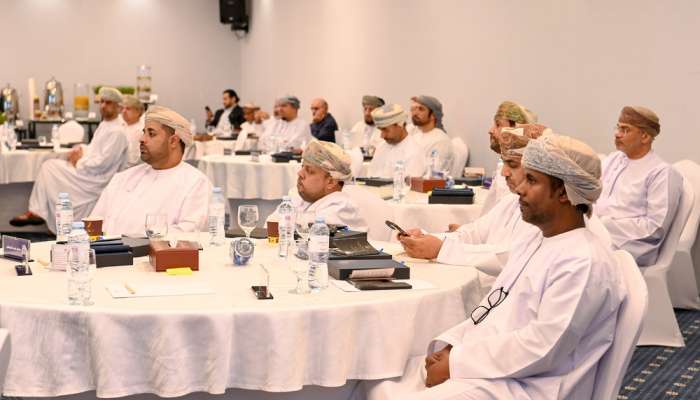
Salalah --- A training program organized by ITHCA Group of Oman Investment Authority, in cooperation with the Ministry of Transport, Communications and Information Technology and the Dhofar Governorate, recommended at the conclusion of its activities in the Wilayat of Salalah the preparation of an artificial intelligence roadmap for each government institution.
This roadmap should define priorities, available opportunities, and areas for utilizing AI technologies, while establishing clear executive phases.
The recommendations of the program, which targeted leaders, decision-makers, digital transformation and information technology teams, as well as data scientists and engineers, stressed the importance of transitioning from the awareness stage to the application stage. This is to be achieved by converting ideas and outputs into practical initiatives and use cases within work environments, and identifying high-priority, implementable initiatives, while specifying the problems they address, their expected added value, and the entity responsible for their execution.
The recommendations called for forming specialized AI teams or focal points within government institutions to follow up on initiatives, explore opportunities, support employees, and coordinate with relevant authorities. They also urged promoting the responsible and safe use of AI in a manner that respects data protection, privacy, cybersecurity, and governance, ensuring the reliable deployment of these technologies.
Furthermore, the program recommended building an institutional culture supportive of innovation and AI, encouraging employees to propose ideas and test new solutions, and fostering continuous learning. It also called for measuring the impact of AI initiatives through clear key performance indicators, including reducing time, raising efficiency, improving service quality, and cutting costs and unnecessary procedures.
The recommendations emphasized the importance of enhancing cooperation and sharing expertise among government institutions to benefit from successful experiences and exchange solutions and practices in the field of AI. They also highlighted converting the program's outputs into an executive plan that includes identifying initiatives, responsible entities, timelines, and mechanisms for measuring success, by implementing specific and measurable initiatives and then developing them based on their results.
The final day of the program featured the "Launch" track, which covered several themes, most notably transitioning from prototype to institutional execution, change management and building internal adoption, success indicators and impact measurement, alongside honoring the participants.
The five-day program aimed to enhance the readiness of institutions to adopt AI technologies and to empower participants by formulating leadership visions that support employing these technologies to improve institutional performance. It also sought to build national capabilities capable of leading innovation and promoting sustainable development within institutions.
The program also included specialized tracks focusing on shaping future vision, understanding AI transformations and their impact on business and society, translating strategies into practical projects, products, and solutions, exploring new business opportunities in the AI economy, and launching initiatives that contribute to achieving a sustainable impact.