Saturday 24 / October / 2026
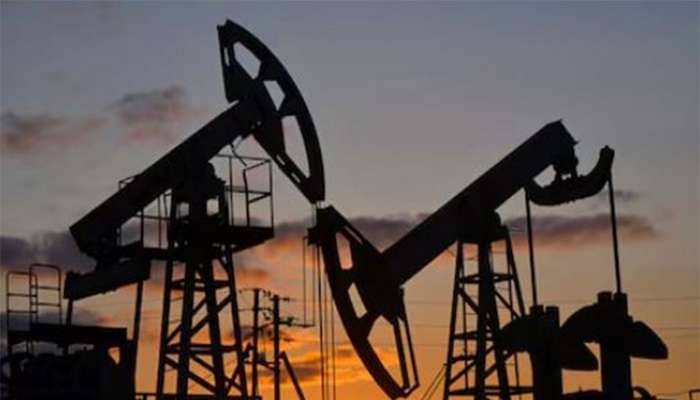
New Delhi: India will continue to honour its overseas petroleum product commitments despite the prospect of steep US tariffs, as disruptions to global energy supplies increase the country’s importance as a diesel supplier.
Union Oil Minister Hardeep Singh Puri said India would maintain product exports and continue investing in refining capacity even as geopolitical tensions disrupt fuel markets and several European refineries face closures.
“We will continue with product exports and honor our export commitments,” Puri said at an industry event last week.
Puri said global crude supplies had remained available despite concerns that a complete closure of the Strait of Hormuz, alongside disruptions at the Bab el-Mandeb Strait, could severely affect energy markets. He pointed to India’s expanded sourcing network and domestic refining capacity as buffers against supply shocks.
India has increased the number of countries from which it sources crude to 41 from 27, while raising domestic LPG production from about 34,000 tonnes per day to 55,000 tonnes per day. The country has also reached peak refining capacity of around 267 million tonnes a year, according to Puri.
The developments come as the global diesel market faces mounting pressure from the conflicts in West Asia and Ukraine. Diesel prices have risen sharply in Europe and the United States as inventories remain historically low and supply disruptions constrain the market.
The United States is also considering restricting diesel exports for up to 90 days. US President Donald Trump has said his administration is seriously considering the move, arguing that the country produces large volumes of diesel but could benefit from retaining more of the fuel domestically.
India emerges as a key diesel supplier
India has increasingly filled the gap left by declining Russian diesel exports. Russia’s seaborne diesel and gasoil exports fell sharply after Moscow imposed restrictions on overseas shipments to protect domestic supplies following disruptions to its refining sector.
According to Vortexa data cited in the report, Russian seaborne diesel and gasoil exports remained around 150,000 barrels per day in August, down 610,000 barrels per day from a year earlier and 81% below the five-year seasonal average.
India has now overtaken Russia as a major supplier of diesel after the United States, according to Kpler. Indian shipments account for about 10% of global diesel trade, while Europe has become increasingly dependent on supplies from Indian refineries.
Vortexa data showed that Indian diesel accounted for around 60% of fuel transiting the Bab el-Mandeb route in August, underscoring the growing importance of Indian refiners to European markets.
Refining capacity gives India a larger global role
India is the world’s fourth-largest refining centre, with 22 operational refineries and installed capacity of about 258.1 million tonnes a year. Domestic petroleum consumption reached 243.2 million tonnes in FY26, while petroleum product exports totalled 61.5 million tonnes, according to government data.
India has approximately 5.4 million barrels per day of refining capacity and imports around 90% of the crude it processes. The country’s ability to purchase crude from a wide range of suppliers and convert it into high-value refined products has allowed it to remain an important exporter despite its dependence on imported crude.
Petroleum product exports rose 67.64% year on year to $6.92 billion in July 2026 from $4.13 billion a year earlier, according to Commerce Ministry data.
However, higher crude prices and rising freight, shipping and war-risk insurance costs are putting pressure on refiners. India’s crude oil import bill rose 56.5% year on year to $63.4 billion during April-July, even though import volumes remained broadly
Despite the decline in export volumes, India’s expanding refining base and diversified crude sourcing are positioning it as an increasingly important supplier to markets facing diesel shortages.