Sunday 18 / October / 2026
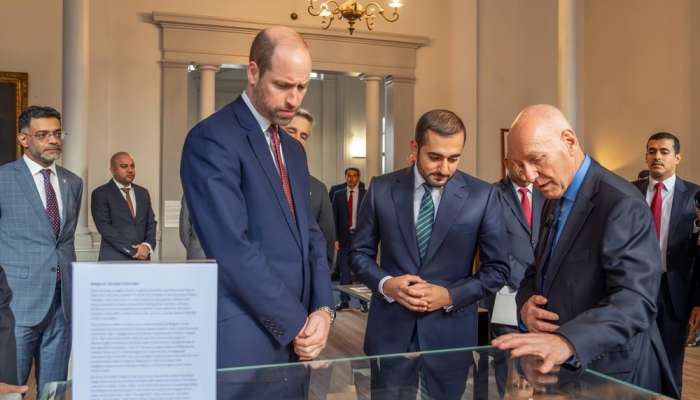
Muscat: Culture bridges distances between nations, brings peoples closer together, and plays a role in building relationships and partnerships, in addition to its influence in fostering understanding among different nations. From this standpoint, cultural relations between the Sultanate of Oman and the friendly United Kingdom have been a principal component of bilateral ties extending over more than two centuries, having evolved from early diplomatic and commercial exchanges into a multifaceted partnership encompassing education, the arts, heritage preservation, and people-to-people bonds. These deep-rooted ties have been reflected in the context of key institutions and have continued, thanks to active cooperation in contemporary cultural fields.
Cultural cooperation between the two friendly countries represents an extension of long-standing historical relations, emerging within a context of particular official interest and being pursued to be more present and of a qualitative nature along clear tracks, including official meetings and the Oman-UK Joint Working Group.
One of the clauses of the Comprehensive Agreement on Enduring Friendship and Bilateral Cooperation, signed by the two friendly countries in 2019, includes support for cooperation in education and the strengthening of ties between universities, alumni networks, and youth exchanges.
Within the context of cultural relations between the two friendly countries, the Sultanate of Oman produced a documentary film in 2017 entitled "Crossing the Empty Quarter," reenacting the story of two Omani travellers and a third British explorer who together covered 1,300 kilometres on foot and on camelback across the Empty Quarter.
This journey retraced the first documented crossing of the Empty Quarter desert in 1930, recorded by an Omani named Sheikh Saleh bin Kalut and a Briton named Bertram Thomas—an unprecedented achievement that made headlines around the world.
This documentation reflects one facet of the civilizational interconnectedness between the two friendly countries and peoples, affirming the depth of historical communication across past decades, concretely embodied in reality across various fields and at different levels. There are also joint projects between the Sultanate of Oman and the United Kingdom, most notably the exploratory journey project "Oman: Jewel of Arabia," launched in London in November 2024 under the patronage of HH Sayyid Theyazin bin Haitham Al Said, Deputy Prime Minister for Economic Affairs, and His Royal Highness Prince William of Wales.
Cultural cooperation extends prominently into the museum sector, as Omani institutions and the British Museum have established a sustainable relationship, exemplified by the British Museum's International Training Programme, through which Omani museum specialists acquired specialized skills in collections care, valuation work, museum practices, and institutional governance.
Exhibitions such as "Jewellery and Identity," which featured Omani jewellery and costumes gifted to the British Museum, have allowed British audiences to explore Omani heritage and highlighted the close cultural ties between the two countries. This cooperation continues to flourish, with dialogue ongoing between Omani and British museums to explore new horizons for knowledge exchange and cultural understanding, in addition to the cultural and heritage exhibitions organized by the Embassy of the Sultanate of Oman in London and cultural tourism promotion campaigns in various British cities.
The British Council has been a pivotal pillar of this relationship since opening its office in the Sultanate of Oman in 1972. Over the past decades, the Council has facilitated educational and cultural exchange on a wide scale, providing English language training to more than 6,000 people annually and enabling more than 16,000 people to obtain British qualifications. Its programmes extend to encompass the arts, education, and society.
The Council also runs the UK alumni network in the Sultanate of Oman, which comprises more than 1,500 graduates and offers events for networking and professional development. In parallel with these efforts, the British Omani Society, founded in 1976, works to strengthen the historical and cultural ties between the two countries through lectures, publications, and outreach in both Muscat and London. In 2011, the Society established the "Next Generation Group" to ensure the continuation of this deep friendship across younger generations.
Among the Society's most prominent activities is the "Arts Group" project, which began in 2024 and focuses on intellectual and artistic exchange between Omani and British artists. Omani artists travelled to Britain in 2024, and in January 2026 British artists visited the Sultanate of Oman to participate in workshops in Muscat and the desert, with an art exhibition held at the British Embassy in Muscat in cooperation with the Ministry of Culture, Sports and Youth.
By bringing together Omani and British artists, the project fosters the exchange of ideas, techniques, and perspectives, contributing to the building of a vibrant artistic community that reflects the shared commitment of both countries to cultural development.
The British Omani Society also hosted last September a series of introductory sessions for the "Live Oman" initiative, held on Oxford Street in London, to introduce the Sultanate of Oman as an integrated destination for living, working, and investing, with the participation of a number of local and international institutions and companies investing in the Sultanate of Oman.
Michelle Potts, Director of the British Omani Society, told Oman News Agency (ONA) that the Royal visit of His Majesty Sultan Haitham bin Tarik to the United Kingdom embodies the strength of Omani-British relations and the shared commitment to building a bright future, as the Society celebrates its golden jubilee, marking fifty years of supporting friendship, understanding, and cooperation between the two countries.
She noted that the visit reflects the growing cooperation in the fields of education, culture, innovation, and trade, and that through the Society's programmes, events, and networks—which help transform these aspirations into firmly rooted people-to-people bonds—it has reached thousands of individuals over fifty years through educational exchanges, cultural initiatives, and commercial engagement.
She added that the Society has evolved over fifty years from an organization founded by 86 members into a community bringing together individuals, educational institutions, cultural organizations, and more than 80 corporate members.
She explained that the Society's role lies in fostering the personal and institutional relationships that form the foundation of the broader bilateral partnership. By bringing together policymakers, academics, business leaders, cultural organizations, and young professionals, the Society contributes to creating opportunities for cooperation, mutual understanding, and shared success.
She said: "The bonds between our two countries far transcend official relations, and we feel them in friendships, educational exchanges, cultural partnerships, and the desire of people in both the Sultanate of Oman and the United Kingdom to learn from one another. These people-to-people bonds are what make the ties more resilient and sustainable."
She noted that while governments, institutions, and companies play an important role, it is the personal relationships formed through study, culture, work, and shared experiences that create lasting understanding.
She explained that over fifty years the Society has supported educational programmes, cultural initiatives, research projects, youth exchanges, and scholarships that have enhanced understanding between the Sultanate of Oman and the United Kingdom.
She noted that among the Society's most prominent achievements is its support for the preservation of more than 120 archival collections related to the Sultanate of Oman, the building of a specialized library containing more than 700 publications on Oman, and enabling hundreds of young people to experience the Sultanate of Oman directly through its educational programmes.
She noted that as the Society looks to the future, Oman Vision 2040 provides a clear ambition and a platform to continue strengthening the relationships underpinning the broader partnership between the Sultanate of Oman and the United Kingdom.
She noted that the Society's focus will increasingly centre on engaging younger generations, creating opportunities for cooperation in areas such as innovation and sustainability, and ensuring that cultural and educational exchange remains at the heart of bilateral relations. She affirmed that the next chapter will be about building on fifty years of success while keeping pace with the aspirations of future generations.
She explained that among the Society's most prominent roles is introducing the British public to the richness and diversity of Omani culture, achieved through lectures, exhibitions, artistic collaboration, publications, and cultural events that celebrate Oman's heritage and contemporary achievements.
She noted that with regard to upcoming events, and within the framework of the 2026 British Autumn Festival organized by the British Embassy in Muscat, the "Stal Gallery" will host an art exhibition by the British Omani Society showcasing works by British and Omani artists who participated in an initiative to promote artistic exchange and development.
On another front, relations between the friendly peoples of the Sultanate of Oman and the United Kingdom enjoy a venerable history, having transcended official ties to reach an authentic human friendship, as Omani and British students exchange academic and cultural visits, fostering mutual understanding between the new generation.
Omanis and Britons are also bound by numerous commercial and social relationships, in addition to tourism exchanges that are witnessing continuous growth. Additionally, the resident communities in both countries contribute to strengthening these bonds through cultural activities and community initiatives, making the relationship between the two countries’ peoples a model of firmly rooted friendship and fruitful cooperation.
In this context, Luke Sands, a British student who studied at the Sultan Qaboos Institute for Teaching Arabic to Non-Native Speakers in the Wilayat of Manah in A’Dakhiliyah Governorate, said: "I chose the Sultanate of Oman because I was initially drawn to the diversity of its nature; I watched videos of trips to the Sultanate of Oman and was amazed by the variety of nature in this country, from valleys and mountains to deserts and beaches."
He added: "As someone from outside the Sultanate of Oman, I initially found traditional Omani dress somewhat unfamiliar. But during my time in this venerable country, I grew to love this attire greatly and decided to wear it myself on many occasions."
Reflecting on his days in the Sultanate of Oman, Luke Sands said: "We would spend the morning attending classes, while we spent the afternoons completing our homework, and in the evening we would go out to play various sports as well as shop at shopping centres. I truly miss those beautiful days in the Sultanate of Oman very much."
He extended an invitation to all his peers to visit the Sultanate of Oman, whether to study or for tourism, affirming that he spent wonderful times in the Sultanate of Oman with one of the kindest peoples he has met in his life, as he described them.
Regarding relations between the Sultanate of Oman and the United Kingdom, he said: "The friendship between the Sultanate of Oman and my country is firmly rooted in history, and I hope that reciprocal visits between officials of both countries will contribute to driving these relations toward broader horizons."
He added: "I have spent sufficient time in the Sultanate of Oman and have come to feel that I am an unofficial ambassador for Omani-British relations, because people-to-people relations are an integral part and a complementary element of official relations."
For her part, Luna Holden, a British student who also studied at the Sultan Qaboos Institute for Teaching Arabic to Non-Native Speakers, said: "I chose the Sultanate of Oman to develop my Arabic by using it daily, and because I have an academic interest in the history of travel and communication between Oman and India, and in the cultural and commercial interactions between different regions of the world. I studied Arabic alongside Hindi and Urdu at the University of Oxford, and I am interested in how ideas, customs, and knowledge are transmitted between societies. Therefore, I wanted to learn about Oman's history and culture through books, as well as through daily life and direct communication with people."
She added: "The experience of forming friendships was beautiful, because I learned a great deal through talking with people. At times it was difficult to express my thoughts in Arabic, but I learned not to fear mistakes. I realized that communication depends on respect and curiosity, not merely on mastering the language. I came to appreciate the culture of hospitality, especially the serving of coffee and dates to guests. I realized that this custom expresses generosity, respect, and that everyday details can reveal much about a society's culture."
Speaking about relations between the Sultanate of Oman and the United Kingdom, she said: "I see the relations between the two countries as founded on history, trade, education, and cultural exchange. I believe that learning the language and getting to know people helps build stronger relationships, because understanding does not come from political agreements alone, but also from shared human experiences. Stereotypes are sometimes influenced by the media, which may focus on conflicts more than on daily life. My experience in the Sultanate of Oman helped me understand the diversity of society and the importance of listening to people directly rather than relying on stereotypes or generalizations."
She affirmed in conclusion: "This experience in the Sultanate of Oman made me more open to different perspectives and more aware of the influence of culture on how we understand the world. I feel that I can be an unofficial ambassador by sharing my experience with my family and friends in Britain, and encouraging them to learn about Oman and its culture."
Saif Abdul Latif, a British student who studied Arabic at the Sultan Qaboos Institute for Teaching Arabic to Non-Native Speakers, said: "When I saw the opportunity to study in the Sultanate of Oman, I seized it immediately because it gave me the chance to experience living in this beautiful country. Although I had only very limited knowledge of Arabic, I was familiar with Omani culture and customs through many members of my family who had visited the Sultanate of Oman."
He added: "I found forming friendships with Omani students very easy. The Omani students welcomed all the students at the Institute with open arms and made the experience exceptional. I encountered no linguistic or cultural barriers, but when we met outside the Institute I would ask them to speak to me in the local dialect so I could learn as much new vocabulary as possible."
He continued: "There is something special that I came to hold in high regard through my experience in the Sultanate of Oman, namely the importance of hospitality. Although it is somewhat familiar to me given my Arab origins, experiencing it as someone raised in Britain made me notice it in a different way: the serving of coffee and food to guests always, even if they hesitate to accept, and asking about people and checking on their comfort—these may seem very small, but they reflect a broader culture of generosity and concern for others."
On bilateral relations between the Sultanate of Oman and his country, Saif Abdul Latif said: "I believe there is a particularly interesting relationship between the Sultanate of Oman and the United Kingdom because there are deep-rooted historical, educational, economic, and cultural ties between the two countries. This made me greatly appreciate the fact that relations between states are not merely governments and politics. They are also built through ordinary people, students, families, and friendships, which is why institutions such as the Sultan Qaboos Institute for Teaching Arabic to Non-Native Speakers are of vital importance, because they offer an experience of living within the culture, not merely a classroom-based experience."
For her part, Sophie Worrall, a British student who studied at the Sultan Qaboos Institute for Teaching Arabic to Non-Native Speakers, said: "The Sultanate of Oman attracted me in particular with its distinctive culture, its history, and its reputation for hospitality. So I wanted to develop my language skills in this environment, given that I had studied Arabic in Britain."
She added: "I greatly enjoyed meeting Omani students and forming friendships with them through the language partner programme. Speaking Arabic with them in a natural environment helped me gain greater confidence, and I found people to be extremely welcoming. Linguistic barriers sometimes appear, but they often turn into opportunities for learning rather than obstacles... What particularly caught my attention was the importance of hospitality, especially the culture of coffee. I had not fully realized how much meaning small gestures carry. They are an expression of generosity, respect, and a sincere desire to make people feel welcome."
Sophie Worrall spoke about bilateral relations between the Sultanate of Oman and the United Kingdom, saying: "I see the relations between the two countries as having a long history and great potential, especially in the fields of education, economy, and politics. Studying in the Sultanate of Oman gave me a deeper understanding of this relationship that goes beyond official political and economic ties."
She added: "This experience made me realize with certainty how differently people see the world, and how important it is to question your own assumptions. It also gave me a greater appreciation for the value of learning languages and cultural exchange. By sharing my experience with people in my country, I can help others form a more enlightened understanding of the Sultanate of Oman, and continue to strengthen the growing relationship between the Sultanate of Oman and the United Kingdom."