Wednesday 11 / November / 2026
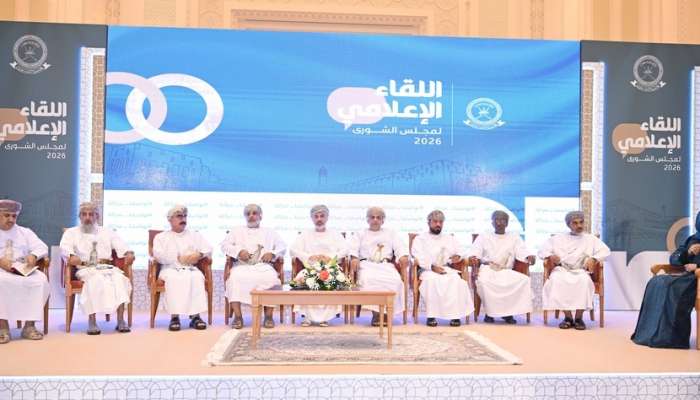
Muscat: The Shura Council reviewed the outcome of its work during the first, second and third ordinary sittings of the tenth term at a media briefing, including its key legislative achievements.
The Council’s annual media briefing was held in the presence of a number of representatives of local Omani media and specialists and those interested in legislative work in the Sultanate of Oman. It reflects the Council’s approach to strengthening its strategic partnership with the media and consolidating effective communication and transparency in conveying information related to its work and competences.
In his remarks, Khalid Hilal Al Maawali, Chairman of the Shura Council, said the Council is keen to respond to the requirements of the current stage and its various developments in a way that strengthens legislative work, aligns with the objectives of Oman Vision 2040 and supports the progress and development witnessed by the Sultanate of Oman across various fields.
He explained that the Council continues to keep pace with national priorities and engage with the issues and files raised by studying topics and presenting visions and recommendations that contribute to reaching appropriate solutions.
He noted that the amendments to some provisions of the Council of Oman Law and the Royal directives to allocate eleven seats for women in the Shura Council come within the ongoing development of the shura process in the Sultanate of Oman and efforts to develop the legislative system and enhance the effectiveness of national participation.
He stressed the Council’s role in engaging with and studying various national issues and presenting visions and recommendations that contribute to addressing challenges.
On his turn, Sheikh Ahmed Mohammed Al Nadabi, Secretary-General of the Shura Council, then gave a visual presentation covering the Council’s key competences and its roles in legislation and oversight, as defined by the Basic Law of the State and the Council of Oman Law. He also reviewed indicators and figures reflecting the reality of the Council’s work since the beginning of the tenth term and the work and outputs achieved across various tracks of parliamentary work.
The briefing included a dialogue session with the chairs of the Shura Council’s permanent committees, dedicated to reviewing the committees’ key achievements and highlighting the topics and files they addressed during the tenth term within the framework of each committee’s competences and objectives, and their efforts in studying national issues and discussing topics related to the sectors within their scope of work. The briefing was accompanied by an exhibition covering the Council’s achievements and outputs, allowing attendees to learn about part of the efforts made and the diversity of its work and achievements. It reflected what has been accomplished in the legislative and oversight tracks and the work of the permanent committees. -ONA