Wednesday 18 / November / 2026
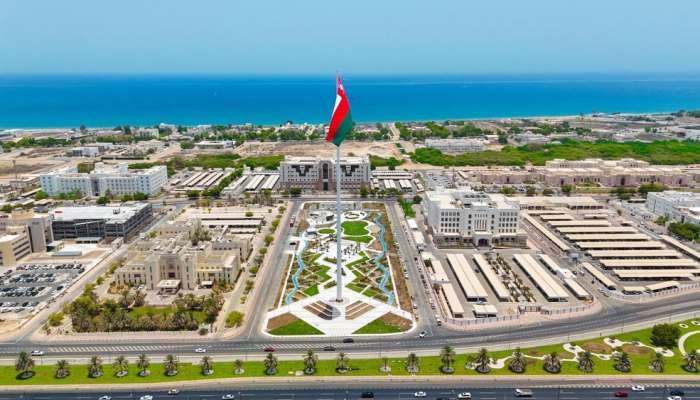
Muscat : The Sultanate of Oman will celebrate its National Day this Friday, November 20th, as part of its ongoing national journey under the leadership of His Majesty Sultan Haitham Bin Tarik . This journey aims to consolidate the achievements of the modern Omani renaissance and move towards broader horizons of comprehensive and sustainable development.
This national occasion comes amidst the Sultanate's renewed renaissance, based on the "Oman 2040" vision. This vision aims to enhance the competitiveness of the national economy, diversify sources of income, empower youth, improve the quality of life, and provide the foundations for prosperity and well-being.
Oman is proceeding with the implementation of the vision's objectives through national programs and projects across various sectors. These programs focus on leveraging national capabilities and resources, developing productive and service sectors, and building a diversified economy capable of keeping pace with regional and international changes.
The first quarter report of Oman Vision 2040 highlighted five years of transformation and progress in the national development journey during the period (2020–2025), encompassing various economic, financial, social, and environmental aspects. Average annual economic growth rose to approximately 3.2 percent during the period (2021–2025), and the contribution of private investment and foreign direct investment increased. Public debt decreased from 65.9 percent to 34.6 percent of GDP, and the Sultanate of Oman regained its investment-grade rating.
The contribution of renewable energy rose to 9 percent of total energy consumption, and the social protection umbrella expanded to exceed 1.5 million beneficiaries by the end of 2025. Indicators for innovation, human development, and the modernization of the legislative and regulatory framework also showed improvement.
The report highlighted Oman's progress in several global competitiveness indicators, including the Index of Economic Freedom, where it advanced from 76th place in 2020 to 39th in 2026, and the Environmental Performance Index, where it climbed 61 places to reach 49th globally. Improvements were also noted in indicators related to governance, government efficiency, regulatory quality, and youth development.
These efforts are ongoing within the framework of the Eleventh Five-Year Development Plan (2026–2030), which focuses on achieving economic and social development priorities, expanding the role of the private sector, improving the efficiency of spending and investment, and providing employment opportunities for Omani nationals.
On the economic and financial front, the Sultanate of Oman achieved indicators in 2026 that reflect its continued efforts to consolidate fiscal sustainability and enhance confidence in the national economy. In September, Standard & Poor's affirmed Oman's credit rating at investment grade (BBB-) with a stable outlook and raised its forecast for real GDP growth to approximately 3.5 percent for the year. The agency also projected a fiscal surplus equivalent to 4.8 percent of GDP, while foreign exchange reserves reached approximately US$19.5 billion by the end of June 2026, indicating the national economy's resilience to external fluctuations.
On the public finance front, government revenues increased by 16 percent by the end of the third quarter of this year, reaching approximately OMR 9.828 billion , compared to approximately OMR 8.481 billion during the same period in 2025. Meanwhile, government spending reached approximately OMR 9.738 billion , resulting in a decrease in the fiscal deficit and a budget surplus of approximately OMR 90 million .
Public debt decreased by approximately OMR 600 million by the end of the third quarter of this year, reaching OMR 14.1 billion . The Ministry of Finance also disbursed OMR 1.434 billion to the private sector, contributing to increased liquidity for institutions and companies and supporting their ability to continue their economic activities.
As part of its economic diversification efforts, Oman's GDP at constant prices grew by 5.1 percent in the second quarter of 2026, reaching approximately OMR 9.9 billion. This growth was driven by a 14.7 percent increase in oil activities and a 0.7 percent increase in non-oil activities.
At the level of economic activities, the GDP of the wholesale and retail trade sector at current prices rose by 5 percent during the first half of the year, reaching approximately OMR 1.735 billion. Foreign investment in the sector also increased by 9.7 percent, reaching approximately OMR 305.3 million. Non-oil economic activity grew by approximately 1.3 percent year-on-year during the same period, according to data from Standard & Poor's.
In the trade and logistics sector, shipping volumes at Salalah Port increased by 15 percent and at Sohar Port by 52 percent during the first half of 2026. This reflects the growing logistics activity and the importance of Omani ports in supporting regional and international trade and diversifying income sources.
As part of efforts to enhance the Sultanate of Oman’s position on the global financial and business map, 2026 witnessed significant progress with the establishment of the Oman Global Financial Centre (OGF), established by Royal Decree No. (8/2026). This aligns with the Sultanate of Oman’s strategic directions aimed at diversifying the national economy and strengthening its position as a global hub for financial services, attracting capital, and supporting innovation.
The OGF aims to attract regional and international financial, banking, and investment capital and institutions, including those operating in conventional and Islamic banking, financial services, and insurance. It also aims to provide a stimulating environment for investment management, company establishment, and business partnerships, while supporting financial innovation, knowledge transfer, and providing quality job opportunities for Omani nationals.
During the year, the center witnessed significant institutional steps to complete its legislative, regulatory, and operational framework. These included the appointment of its Board of Directors in June 2026, chaired by His Highness Sayyid Theyazin bin Haitham Al Said, Deputy Prime Minister for Economic Affairs. The Board held its first meeting to review the progress of the establishment process and finalize the regulatory framework for its operations. This enhances the center's readiness to attract international institutions and investments, and solidifies the Sultanate of Oman's position as a regional and international financial hub connecting the Gulf, South Asia, and East Africa markets.
On the social front, the 2026 state budget allocated approximately OMR 614 million to the social protection system, along with allocations to subsidize electricity, water, transportation, food commodities, and petroleum products. This provides a social safety net and contributes to easing the cost of living for citizens.
From January of this year until October 10, 2026, the Sultanate of Oman witnessed the inauguration of several development, service, and investment projects, the announcement of new projects, and the laying of foundation stones for others. These initiatives are part of ongoing efforts to develop infrastructure, improve public services, grow economic sectors, and expand investment opportunities across the various governorates.
In the health sector, the Suwaiq Referral Hospital in North Al Batinah Governorate was inaugurated on January 7, at a cost exceeding OMR 75 million , with a capacity of 260 beds, expandable as needed. The Khasab Referral Hospital in Musandam Governorate was also inaugurated on January 11, along with the Central Public Health Laboratory in Seeb, which contributes to enhancing laboratory testing and public health capabilities.
The sector also saw the opening of the new expansion project at Sur Hospital on April 1, the Ezz Pharmaceuticals factory in Al Dakhiliyah Governorate on April 22, and Mahout Hospital in Al Wusta Governorate on April 29, at a total cost of OMR 17 million 1.
In the industrial sector, efforts continued to localize industries and increase the added value of local resources through projects in industrial cities, economic zones, and free zones. These projects encompassed chemical, food, and manufacturing industries, and included the launch of the first phase of a wind turbine manufacturing project in the Special Economic Zone at Duqm , with an investment exceeding OMR 70 million and an annual production capacity of up to 1,000 megawatts.
The Special Economic Zone at Duqm also witnessed the implementation of infrastructure development projects, including the opening of the dual carriageway connecting Duqm Airport to the crude oil storage tanks in Ras Markaz, a distance of 51 kilometers.
As part of ongoing projects, the foundation stone was laid for Al-Namaa Hospital in North Al Sharqiyah Governorate in May, at an estimated cost of OMR 56.05 million , with a 30-month construction period. Simultaneously, development projects continue in the transport, industry, tourism, and services sectors, supporting balanced development across governorates, expanding investment opportunities, creating jobs, and improving the level of services provided to citizens and residents.
Empowering national talent and providing job opportunities is a key pillar of development and a fundamental aspect of building a sustainable economy centered on Omani citizens. The Ministry of Labor achieved 53,525 employment, replacement, and on-the-job training opportunities by the end of September 2026, representing an 89 percent achievement rate of the annual target. This reflects the significant efforts made to broaden horizons for national talent and prepare them to participate in various economic sectors.
In the area of innovation and competitiveness, the Sultanate of Oman made significant progress in the innovation inputs pillar of the 2026 Global Innovation Index, advancing eight places to reach 47th globally, compared to 55th last year. It maintained its 69th position in the overall index ranking, which is published annually by the World Intellectual Property Organization (WIPO) and measures the performance of 139 economies worldwide.
The report's findings revealed that 15 of Oman's sub-indicators within the overall index ranked among the top 40 globally. Oman achieved 9th place globally in net foreign direct investment inflows as a percentage of GDP, 14th in the development of specialised clusters, and 16th in electricity production per million inhabitants. This reflects the Sultanate's strong foundations, policies, and programs that support innovation.
In terms of foreign policy and international relations, the year 2026 witnessed remarkable diplomatic activity through the foreign visits made by His Majesty Sultan Haitham Bin Tarik , which included a number of countries in Europe, Asia and Africa, including France, Botswana, Angola, Kazakhstan, the United Kingdom, the People’s Republic of China and Brunei Darussalam.
These visits reflected the Sultanate of Oman’s keenness to strengthen its international relations, expand areas of political, economic, investment and cultural cooperation, open new horizons for partnerships with friendly countries, and enhance its presence and role in its regional and international environment.
The visits witnessed the signing of several documents, including agreements, memoranda of understanding, and executive programs in various fields. These aimed to establish frameworks for joint cooperation, expand partnerships, and create new opportunities for trade and investment. They also sought to develop cooperation in the economic, developmental, cultural, and scientific sectors, thereby translating shared understandings into practical projects and initiatives that serve mutual interests.
In reaffirming its core principles of foreign policy, the Sultanate of Oman, in its address to the 81st session of the United Nations General Assembly in New York, emphasized its approach based on the principles of good neighborliness, respect for the sovereignty and independence of states, non-interference in their internal affairs, and adherence to international law and the Charter of the United Nations. This reflects its commitment to establishing relations based on mutual respect and constructive cooperation, and to contributing to the maintenance of international peace and security.
In light of regional and international developments, the Sultanate of Oman continues its diplomatic role, advocating for dialogue, understanding, restraint, de-escalation, and crisis resolution through political solutions. This approach aims to preserve the region's security and stability and spare its people the repercussions of conflict. The Sultanate of Oman emphasizes the importance of intensifying regional and international efforts, coordinating with relevant countries and organizations, and supporting initiatives aimed at achieving reconciliation, consolidating stability, and safeguarding maritime navigation and freedom of passage in accordance with international law.
Under the leadership of His Majesty Sultan Haitham Bin Tarik , the Sultanate of Oman is committed to developing its relations with brotherly and friendly nations and expanding consultation and coordination on issues of common interest. This strengthens mutual interests and reinforces Oman's position as a trusted partner in promoting dialogue, cooperation, and understanding among nations.