Sunday 29 / November / 2026
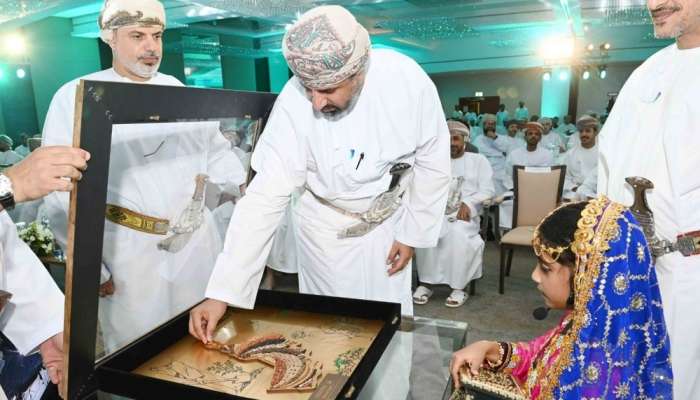
Muscat— The Environment Authority launched today the National Lab for the "Plant Oman" initiative, which represents an integrated national framework to unify efforts and strengthen institutional partnership in the field of environmental protection and the development of natural resources and vegetation cover.
The initiative comprises three main strategic tracks and eight integrated national programs—both foundational and enabling—and was launched under the auspices of Dr. Mahad Said Ba'owain, Minister of Labour.
Dr. Mohammed Rashid Al Maamari, Director of the Cultivation and Nurseries Department at the Environment Authority and Project Manager, explained that the "Plant Oman" initiative aims to unify national efforts to cultivate a living and productive vegetation cover by 2040, contributing to conserving water resources, enhancing food security, absorbing carbon, restoring ecosystems and biodiversity, combating desertification, and confronting the impacts of climate change, thereby ensuring the sustainability of natural resources.
He noted that the initiative rests upon three strategic tracks: Environment and Biodiversity, Climate Action, and Food Security. These tracks are translated through four main programs comprising Ecosystems and Sustainable Afforestation, Food Security and Fruitful Afforestation, Coastal Ecosystems and Mangrove Restoration, and Sustainable Governorates and Cities, alongside enabling programs concerned with green finance and investment, providing enablers and natural resources, governance and legislation, and media and awareness, thereby enhancing the integration of roles and partnership among various sectors.
He added that the lab aims to implement a package of agricultural and afforestation projects and sites across the various governorates of the Sultanate of Oman, focusing on the sustainability of trees and water resources, utilizing treated water, attracting investments and climate finance, and developing a national system for governance and follow-up.
The initiative adopts the measurement of the actual impact of projects through carbon, water, food, and livelihood indicators, as well as verifying tree survival 36 months after planting, ensuring the achievement of sustainable environmental and economic results in the long term.
The initiative comes as a long-term strategic national project led by the Environment Authority in partnership with various sectors, aiming to bring about a sustainable transformation in developing vegetation cover, restoring ecosystems, enhancing food security, and supporting national efforts in confronting climate change through an integrated system combining scientific planning, innovation, green investment, and community participation, with its strategic vision extending until 2040.
The "Plant Oman" initiative seeks to unify national efforts as well as existing and future initiatives related to afforestation, cultivation, and natural habitat restoration within a unified strategic framework that integrates with the targets of "Oman Vision 2040" and the Sustainable Development Goals, stemming from the importance of vegetation cover as one of the fundamental pillars of ecological balance, protecting natural resources, improving quality of life, and enhancing the resilience of ecosystems to adapt to climate challenges.
The initiative is anchored on three main strategic tracks: Environment and Biodiversity, Food Security, and Climate Action. The first track focuses on developing wild and native trees, restoring natural habitats, combating desertification, and protecting biodiversity, while the Food Security track is concerned with expanding the cultivation of fruit-bearing trees and crops of economic and nutritional feasibility, and promoting sustainable agricultural production. As for the Climate Action track, it focuses on enhancing the role of vegetation cover and ecosystems in carbon absorption, expanding nature-based solutions, and restoring coastal ecosystems and developing mangrove forests.
The initiative includes eight integrated national programs: the Ecosystems and Sustainable Afforestation Program, the Food Security and Fruitful Afforestation Program, the Sustainability of Coastal Ecosystems and Mangrove Forests Program, the Enablers and Natural Resources Program, the Green Finance and Investment Program, the Sustainable Governorates and Cities Program, the Governance and Legislation Program, and the Awareness and Media Program. These programs work to translate strategic orientations into executive projects and initiatives that take into account the environmental characteristics of each governorate and benefit from available opportunities to develop and sustain natural resources.
The initiative pays special attention to enhancing the efficiency of using water, soil, and land resources, employing scientific research and modern technologies in cultivation, irrigation, and vegetation monitoring operations, encouraging the participation of the private sector, academic and research institutions, and the local community in implementing projects, and stimulating green investment and developing sustainable funding sources that contribute to ensuring the continuity of programs and achieving their goals.
Within the framework of digital transformation, the initiative includes developing a national platform for environmental intelligence that relies on geographic information systems (GIS), satellite imagery, remote sensing technologies, and artificial intelligence to build an integrated national database linking information related to vegetation cover, trees, biodiversity, soil, water, carbon, and implemented projects, thereby supporting planning, decision-making, performance monitoring, and impact measurement at both the national and governorate levels.
The initiative also adopts a participatory governance system comprising the Steering Committee, the Central Executive Team, specialized program teams, and coordination mechanisms at the governorate level, ensuring clarity of roles and responsibilities, integration of efforts among participating entities, and enhanced efficiency in implementation and follow-up.
The initiative adopts a methodology for measuring environmental, economic, and social impact that is not limited to the numbers of trees planted or areas cultivated, but rather includes tree survival and growth rates, improvement of vegetation cover, restoration of natural habitats and biodiversity, water use efficiency, improvement of soil properties, and the contribution of ecosystems to carbon absorption, in addition to indicators of food production, investments, partnerships, and community participation.
The "Plant Oman" initiative is expected to contribute to enhancing vegetation cover, restoring degraded ecosystems, raising the efficiency of natural resource management, supporting the food security system, protecting coastal ecosystems and developing mangrove forests, creating new economic and investment opportunities in the governorates, and strengthening the Sultanate of Oman's contribution to international efforts related to climate, biodiversity, and ecosystem restoration.
The Environment Authority affirms that achieving the targets of the initiative represents a shared national responsibility that requires concerted efforts from government, private, and academic institutions, civil society organizations, and members of society, and translating environmental participation into sustainable practices and projects with a tangible impact on the environment and humanity.
The initiative bears the slogan "Plant Oman: A Growing Impact, Conserved Resources, and a More Sustainable Future," in affirmation that tree planting is not limited to increasing green spaces, but represents a national investment in protecting natural resources, enhancing food security and climate action, and building a sustainable environmental future for future generations.
The launch of the lab was attended by Dr. Abdullah Ali Al Amri, Chairman of the Environment Authority and Chairman of the Initiative's Steering Committee, along with a number of Governors, Undersecretaries, Chief Executive Officers, representatives of government and private entities, academic institutions, and civil society organizations, as well as a number of specialists and those interested in environmental affairs.